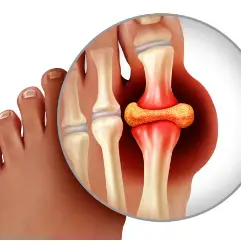
Condition Focus: Acute Joint Inflammation — COX-2/PGE₂ Pathway
This study from Albertini and colleagues answers a specific mechanistic question: does PBM reduce pain and inflammation through the same cyclooxygenase (COX) pathway that NSAIDs target? Using a carrageenan-induced acute knee joint inflammation model in rats, the researchers measured COX-2 expression, PGE₂ levels, neutrophil infiltration, and joint edema after treatment with 660 nm GaAlAs laser at 7.5 J/cm².
The results confirmed that 660 nm PBM suppresses COX-2 expression and reduces PGE₂ — the exact molecular targets of NSAIDs like ibuprofen, naproxen, and diclofenac. Additionally, neutrophil infiltration was reduced and joint edema was decreased. This is a single study demonstrating all four therapeutic effects simultaneously: enzyme suppression, prostaglandin reduction, immune cell modulation, and swelling reduction.
The COX-2/PGE₂ connection is particularly important for positioning PBM as an NSAID alternative. When a clinician or pharmacist asks “how does this work?” the answer can include: “PBM suppresses the same COX-2/PGE₂ pathway that NSAIDs target, but through a non-pharmacological, local mechanism rather than systemic enzyme inhibition.” This mechanistic alignment strengthens the NSAID-alternative positioning with a level of specificity that general “anti-inflammatory” claims cannot achieve.
The choice of 660 nm wavelength is also significant: this is the visible red wavelength in the G.O.A.T.’s dual-wavelength configuration, demonstrating that the shorter-wavelength component of the device has direct COX-2/PGE₂ suppression capability in joint tissue.
G.O.A.T. for Gout Alignment:
The G.O.A.T.’s 660 nm wavelength is identical to that used in this study. At 7.5 J/cm², this study used a higher fluence than the G.O.A.T.’s 4 J/cm² target, but within the effective range. The COX-2/PGE₂ suppression demonstrated here provides the mechanistic basis for the G.O.A.T.’s positioning as an NSAID alternative for gout flare pain.
Link to original research here
Editor’s note: The PGE₂ reduction demonstrated here was also measured in the landmark gout RCT by Soriano et al 2006. The full four-cytokine panel including PGE₂ is confirmed in Tomazoni et al 2017. The neutrophil infiltration reduction parallels findings in Alves et al 2014. For the edema reduction via a different mechanism (cannabinoid receptors at 660 nm), see Neves et al 2018.
Related Articles
- PBM of Pain and Inflammation in Microcrystalline Arthropathies – Soriano et al 2006
- Effects of PBM on Inflammatory Response in Experimental OA – Tomazoni et al 2017
- Effect of PBM on Inflammatory Mediators and Neutrophils in Joint Inflammation – Alves et al 2014
- PBM Improves Acute Inflammation via Cannabinoid Receptor Activation – Neves et al 2018
- PBM and Edema: Vascular Permeability and NIR Wavelength – 2021
Key Takeaways
- 660 nm PBM suppresses COX-2 and reduces PGE₂ in acute joint inflammation — the NSAID mechanism
- Neutrophil infiltration reduced and joint edema decreased in the same study
- Provides the mechanistic basis for “PBM targets the same pathway as NSAIDs”
- 660 nm = the visible red wavelength in the G.O.A.T.’s dual-wavelength design
Study Overview
| Study Type: | Controlled animal study (preclinical) |
| Wavelength(s): | 660 nm GaAlAs, 30–100 mW |
| Treatment Protocol: | 7.5 J/cm²; carrageenan-induced acute knee joint inflammation |
| Sample Size: | Multiple rat groups |
| Primary Outcome: | COX-2↓, PGE₂↓, neutrophil infiltration↓, edema↓ |
Full Citation
Albertini R, Villaverde AB, Aimbire F, et al. (2007). Anti-inflammatory effects of low-level laser therapy (LLLT) with two different red wavelengths (660 nm and 684 nm) in carrageenan-induced rat paw edema. Journal of Photochemistry and Photobiology B: Biology, 89(1), 50–55. View Publication