Condition Focus: Joint Inflammation, Inflammatory Pain, Immune Modulation — Comprehensive Mechanism Review
If you read one paper to understand how photobiomodulation reduces inflammation, this is it. Michael Hamblin at Harvard Medical School and Massachusetts General Hospital wrote this comprehensive review mapping every known anti-inflammatory mechanism of PBM, from cellular photon absorption through to clinical outcomes in inflamed tissue.
The review identifies three primary anti-inflammatory pathways. First, NF-κB modulation: PBM suppresses NF-κB activation in inflamed cells while paradoxically activating it in quiescent cells — a biphasic response that means PBM dials down inflammation where it exists without suppressing normal immune surveillance. Second, M1→M2 macrophage polarization: PBM shifts activated macrophages from the pro-inflammatory M1 phenotype (which produces TNF-α, IL-1β, IL-6) to the anti-inflammatory M2 phenotype (which produces IL-10 and promotes tissue repair). Third, direct cytokine modulation: PBM reduces PGE₂, TNF-α, IL-1β, and IL-6 while increasing IL-10 across multiple tissue types and inflammatory models.
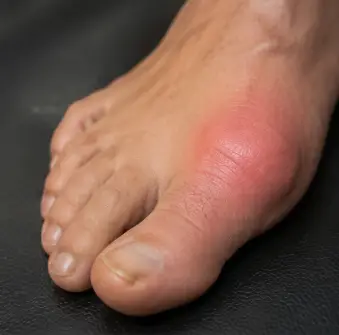
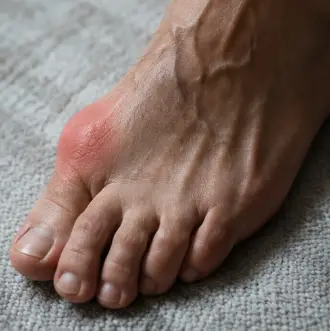
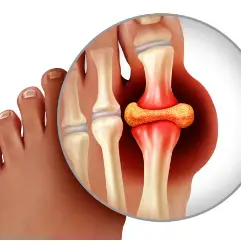
The review explicitly discusses joint inflammation, making it directly applicable to gout. The ROS-mediated biphasic response is also central: in healthy cells, PBM produces a brief, mild ROS increase that triggers beneficial adaptive responses. In stressed or inflamed cells — like those in a gouty joint — PBM reduces the excessive ROS that is driving the pathological inflammatory cascade.
This paper is the mechanistic backbone of the entire G.O.A.T. research library. Every anti-inflammatory study in this library demonstrates one or more of the pathways mapped here.
G.O.A.T. for Gout Alignment:
The G.O.A.T.’s 660 nm + 850 nm wavelengths and 5 mW/cm² irradiance operate within the red and NIR ranges reviewed here (600–950 nm). The three anti-inflammatory pathways — NF-κB suppression, M1→M2 polarization, and cytokine modulation — are the mechanisms through which the G.O.A.T. addresses gout inflammation. Hamblin’s review is the authoritative source linking these wavelengths to these outcomes.
Link to original research here
Editor’s note: This foundational review connects to nearly every study in our library. The M1→M2 macrophage shift is explored in detail with specific pathways in Tian et al 2023 and Wavelength and Timing 2023. The NF-κB activation in quiescent cells versus suppression in inflamed cells is demonstrated mechanistically in Chen et al 2011. The neutrophil-specific anti-inflammatory effects in joints are detailed in Alves et al 2014, and the COX-2/PGE₂ pathway in Albertini et al 2007.
Related Articles
- PBM Increases M2 Macrophages via PI3K/AKT/mTOR at 980nm – Tian et al 2023
- Wavelength and Timing in PBM-Induced Macrophage Polarization – 2023
- PBM Activates NF-κB via Mitochondrial ROS at 810nm – Chen et al 2011
- Effect of PBM on Inflammatory Mediators and Neutrophils in Joint Inflammation – Alves et al 2014
- Anti-Inflammatory Effect of PBM on COX-2 and PGE₂ in Joint Inflammation – Albertini et al 2007
Key Takeaways
- Three primary PBM anti-inflammatory pathways: NF-κB suppression, M1→M2 macrophage shift, cytokine modulation
- Biphasic NF-κB response: suppressed in inflamed cells, activated in quiescent cells
- ROS reduction in stressed cells interrupts the oxidative stress driving inflammation
- Joint inflammation specifically discussed — directly applicable to gout
- Authored by Hamblin at Harvard/MGH — highest authority in PBM research
Study Overview
| Study Type: | Comprehensive review |
| Wavelength(s): | Red (600–700 nm) + NIR (780–950 nm) |
| Treatment Protocol: | Review: 0.18–9 J/cm² across studies |
| Sample Size: | Comprehensive review of cellular, animal, and clinical evidence |
| Primary Outcome: | NF-κB suppression, M1→M2 shift, PGE₂/TNF-α/IL-1β/IL-6↓, IL-10↑ |
Full Citation
Hamblin MR. (2017). Mechanisms and applications of the anti-inflammatory effects of photobiomodulation. AIMS Biophysics, 4(3), 337–361. View Publication