Condition Focus: Acute Joint Inflammation — Neutrophil Infiltration and Inflammatory Mediator Suppression
During a gout flare, one of the most destructive events at the cellular level is the massive influx of neutrophils — the white blood cells that rush to the joint in response to urate crystal detection. Neutrophils amplify inflammation by releasing their own cytokines, proteolytic enzymes, and reactive oxygen species, often causing more tissue damage than the crystals themselves. This study from Alves and colleagues directly measured PBM’s effects on neutrophil infiltration and inflammatory mediator levels in an acute joint inflammation model.
Published in Arthritis Research & Therapy — a respected rheumatology journal — the study demonstrated that PBM significantly reduced neutrophil recruitment to the inflamed joint. This is not just an indirect effect of reducing the chemokines that attract neutrophils; PBM appeared to modulate multiple points in the neutrophil recruitment cascade, including the inflammatory mediators that serve as recruitment signals and the vascular changes that allow neutrophils to migrate from blood into tissue.
The joint-specific nature of this model is important. Many anti-inflammatory studies use subcutaneous or peritoneal inflammation models. By using a joint inflammation model, Alves demonstrated that PBM’s anti-inflammatory effects are achievable within the specific tissue architecture of a joint capsule — where synovial fluid, cartilage, and the confining capsule structure create a unique inflammatory microenvironment.
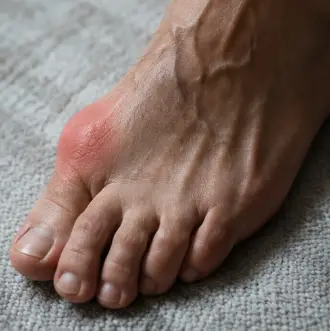
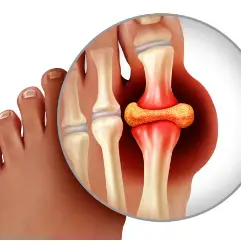
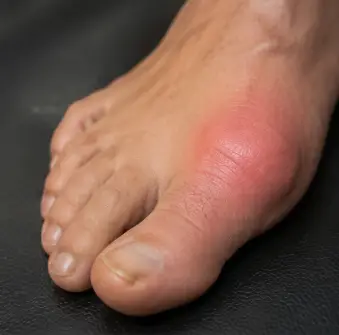
For gout, neutrophil infiltration is the signature cellular event of an acute flare. The “white tide” of neutrophils into the joint space is what drives the extreme swelling, redness, and pain that patients experience. Any intervention that can reduce this infiltration addresses the most clinically significant aspect of the acute gout response.
G.O.A.T. for Gout Alignment:
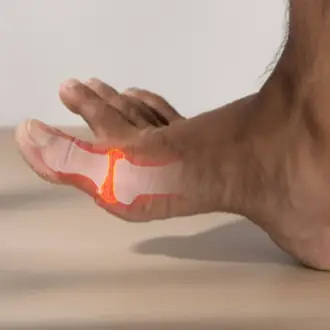
The G.O.A.T.’s application to the MTP joint delivers light directly to the same tissue architecture studied here — an enclosed joint space. The reduction of neutrophil infiltration demonstrated in this model addresses the cellular event most responsible for gout flare severity.
Link to original research here
Editor’s note: The neutrophil infiltration reduced here is triggered by the NLRP3-IL-1β cascade mapped in Kingsbury et al 2011. The PGE₂ and COX-2 pathways that contribute to neutrophil recruitment are directly measured in Albertini et al 2007. The macrophage phenotype shift that modulates neutrophil recruitment signals is reviewed in M1→M2 Polarization Review 2025. For the edema that neutrophil infiltration causes in joints, see TMJ Inflammation 2020.
Related Articles
- The Role of the NLRP3 Inflammasome in Gout – Kingsbury et al 2011
- Anti-Inflammatory Effect of PBM on COX-2 and PGE₂ in Joint Inflammation – Albertini et al 2007
- PBM and Macrophage Polarization: M1→M2 Shift Review – 2025
- PBM Inhibits TMJ Inflammation and Reduces Edema – 2020
- Effects of PBM on Inflammatory Response in Experimental OA – Tomazoni et al 2017
Key Takeaways
- PBM significantly reduced neutrophil infiltration in an acute joint inflammation model
- Neutrophil influx is the signature cellular event of gout flares — the primary driver of swelling and tissue damage
- Joint-specific model confirms PBM effects within enclosed joint architecture
- Published in Arthritis Research & Therapy — peer-reviewed rheumatology journal
Study Overview
| Study Type: | Controlled animal study (preclinical) |
| Wavelength(s): | Laser |
| Treatment Protocol: | Acute joint inflammation model, PBM treatment |
| Sample Size: | Multiple rat groups |
| Primary Outcome: | Reduced neutrophil infiltration and inflammatory mediators in joint |
Full Citation
Alves AC, Vieira RP, Leal-Junior EC, et al. (2013). Effect of low-level laser therapy on the expression of inflammatory mediators and on neutrophils and macrophages in acute joint inflammation. Arthritis Research & Therapy, 15(5), R116. View Publication