Condition Focus: Acute Musculoskeletal Pain — Rapid Onset and Recovery
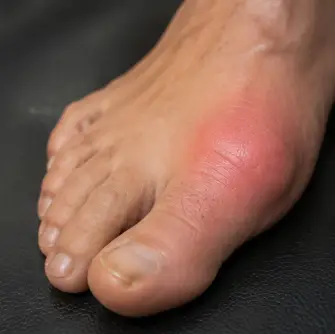
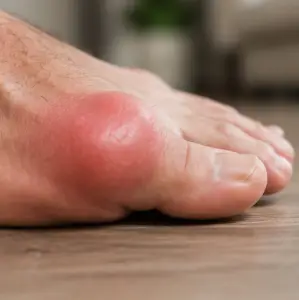
A gout flare has more in common with an acute sports injury than most people realise. Both involve sudden onset of intense pain, rapid swelling, loss of function, and the urgent need to return to normal activity. This meta-analysis from Morgan and colleagues examined PBM’s effects on exactly this scenario: acute musculoskeletal pain with the endpoint of return to play.
Published in the Journal of Strength and Conditioning Research, the analysis pooled data from controlled trials where PBM was applied to acutely injured athletes. The results showed that PBM reduces acute musculoskeletal pain and may accelerate the timeline for return to activity.
The acute pain model is the closest analogy in the PBM literature to a gout flare. Chronic pain studies (which make up the majority of PBM evidence) test whether PBM helps with ongoing, baseline-level pain. But gout patients need to know whether PBM can address the explosive onset of a flare — pain that goes from zero to maximum within hours. This meta-analysis demonstrates that PBM is effective in exactly that acute-onset, high-severity scenario.
The “return to play” outcome metric also translates well: gout patients want to return to walking, working, and daily activity, not just to achieve a modest reduction in pain scores.
G.O.A.T. for Gout Alignment:
The acute onset, high severity, rapid-recovery profile of sports injuries parallels the gout flare experience. The G.O.A.T. is designed for home use during acute flares — the same treatment-at-onset timing that produced results in these athlete trials.
Link to original research here
Editor’s note: The acute pain evidence here complements the chronic pain data in PBM Efficacy for Pain and Inflammation 2023. For the direct gout comparison of PBM versus NSAIDs in acute flare, see Soriano et al 2006. The edema reduction that accompanies acute pain relief is demonstrated in the knee swelling RCT by Chia et al 2025. The whole-body triple-blind RCT confirming sustained pain relief is reported in Navarro-Ledesma et al 2022.
Related Articles
- Efficacy of PBM in Treatment of Pain and Inflammation – 2023
- PBM of Pain and Inflammation in Microcrystalline Arthropathies – Soriano et al 2006
- PBM on Swelling Reduction and Recovery in TKA – Chia et al 2025
- Whole-Body PBM on Pain and QoL: Triple-Blind RCT – Navarro-Ledesma et al 2022
- PBM for Musculoskeletal Disorders and OA with NSAID Comparison – 2019
Key Takeaways
- PBM reduces acute musculoskeletal pain in a sudden-onset, high-severity model
- Return-to-play endpoint translates to return-to-activity for gout patients
- Acute pain model is the closest analogy to gout flare in PBM literature
- Treatment at onset — the same timing the G.O.A.T. is designed for
Study Overview
| Study Type: | Systematic review and meta-analysis |
| Wavelength(s): | Multiple across included trials |
| Treatment Protocol: | Varies; applied to acute injuries |
| Sample Size: | Multiple controlled trials pooled |
| Primary Outcome: | Reduced acute pain; trend toward faster return to activity |
Full Citation
Morgan RM, et al. (2024). Photobiomodulation therapy on pain and return to play of injured athletes: a systematic review and meta-analysis. Journal of Strength and Conditioning Research. View Publication