Condition Focus: Post-Surgical Knee Swelling — Objective Bioimpedance Measurement
One of the challenges in swelling research is objective measurement — asking patients “is your joint less swollen?” introduces subjectivity. This 2025 RCT from Chia and colleagues solved this problem by using bioimpedance spectroscopy, a technique that measures fluid content in tissue by passing a tiny electrical current and analysing how it travels through the tissue. More fluid (edema) means lower impedance.
In patients recovering from total knee arthroplasty — a procedure that reliably produces significant postoperative knee swelling — PBM treatment reduced impedance changes compared to the control group, indicating less fluid accumulation in the treated knees. The treated group also showed improved early mobility, suggesting that the edema reduction translated to functional benefit.
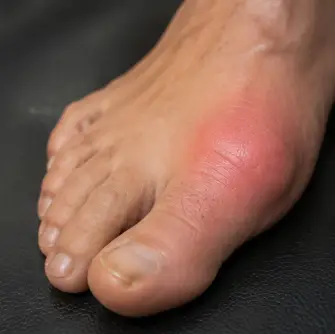
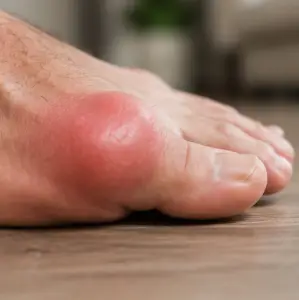
For gout, joint swelling is the most visible and functionally limiting symptom of an acute flare. The MTP joint in the big toe becomes so swollen that patients cannot wear shoes, cannot walk normally, and sometimes cannot bear any weight at all. An intervention demonstrated to reduce joint swelling in a controlled, objectively measured setting provides direct supporting evidence for PBM in the edema component of gout flares.
The use of bioimpedance rather than subjective swelling scores is particularly valuable: it provides quantifiable, reproducible evidence that PBM reduces tissue fluid accumulation — not just the patient’s perception of swelling.
G.O.A.T. for Gout Alignment:
The G.O.A.T. targets joint edema in the MTP joint — the same type of enclosed-joint swelling that bioimpedance measured in this study. The objective fluid reduction demonstrated here supports the G.O.A.T.’s application during acute gout flares where rapid swelling reduction is needed for functional recovery.
Link to original research here
Editor’s note: This is one of the few PBM swelling studies using objective measurement. The edema reduction via alternative mechanisms — cannabinoid receptor activation at 660 nm — is demonstrated in Neves et al 2018. For the dose-comparison approach to edema reduction, see Al Musawi et al 2026. The vascular permeability changes that underlie joint swelling are reviewed in PBM and Edema 2025. For the leukocyte-driven component of swelling, see TMJ Inflammation 2021.
Related Articles
- PBM Improves Acute Inflammation via Cannabinoid Receptor Activation – Neves et al 2018
- PBM for Reducing RA Using Different Energy Densities – Al Musawi et al 2026
- PBM on RA and OA: Edema and Vascular Permeability – Fonseca et al 2025
- PBM Inhibits TMJ Inflammation and Reduces Edema – 2021
- PBM on Pain and Return to Play of Injured Athletes – Morgan et al 2024
Key Takeaways
- Bioimpedance measurement provides objective, quantifiable evidence of swelling reduction
- PBM reduced post-surgical knee edema versus control in a randomised trial
- Improved early mobility — functional benefit, not just laboratory improvement
- Directly relevant to gout’s acute MTP joint swelling
Study Overview
| Study Type: | Randomised controlled trial |
| Wavelength(s): | LLLT (specific wavelength not reported in abstract) |
| Treatment Protocol: | Post-TKA treatment course |
| Sample Size: | Randomised patient groups post-knee arthroplasty |
| Primary Outcome: | Reduced swelling (bioimpedance) and improved early mobility |
Full Citation
Chia WT, et al. (2025). Photobiomodulation on swelling reduction and recovery in total knee arthroplasty: a randomised controlled trial. Photobiomodulation, Photomedicine, and Laser Surgery. View Publication