Condition Focus: Chronic Musculoskeletal Pain, Acute Pain, Post-Surgical Inflammation
This 2023 systematic review published in Healthcare evaluated 11 randomized controlled trials to answer two questions simultaneously: does PBM reduce pain, and is that reduction driven by measurable changes in inflammatory biomarkers? By requiring both clinical outcomes (pain scores) and biological confirmation (cytokine levels), this review provides mechanistically grounded evidence rather than relying on subjective pain reports alone.
The results showed that 5 of 7 trials evaluating chronic pain demonstrated significant improvement with PBM. Of the studies that measured inflammatory cytokines, 2 of 3 confirmed reductions in IL-6, IL-8, and TNF-α — providing biological proof that the pain reduction is driven by genuine anti-inflammatory effects, not just neural pain masking.
Each included trial was assessed using the PEDro quality scale, a validated tool for evaluating the methodological rigour of physiotherapy research. This quality assessment strengthens confidence in the results by accounting for factors like blinding, randomisation, and intention-to-treat analysis.
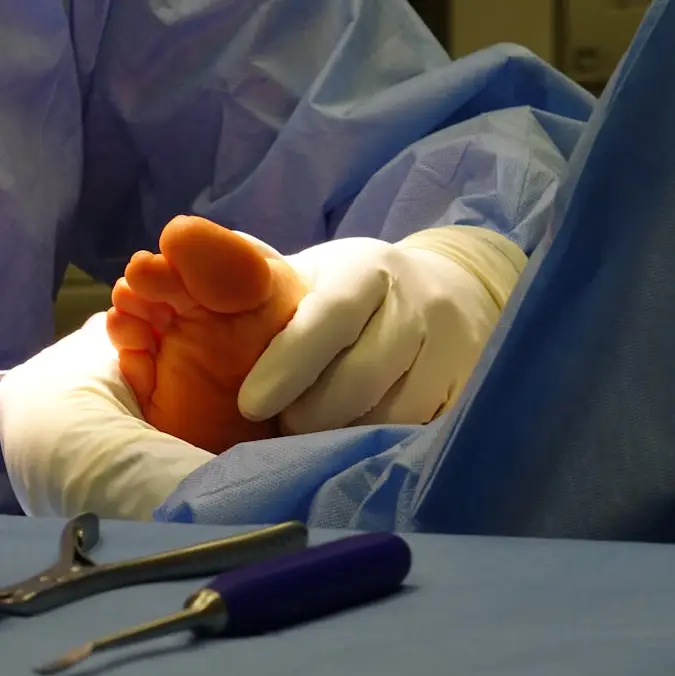
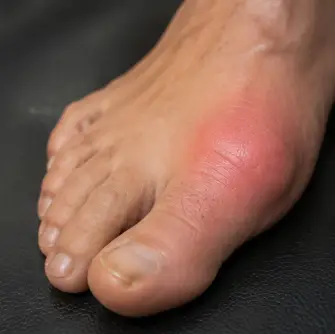
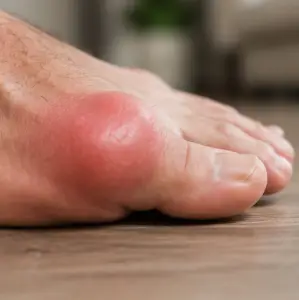
For gout, the cytokine-confirmed pain reduction is the key insight. Gout pain is inflammation-driven — it is not a mechanical pain or a neuropathic pain in the traditional sense. When IL-6 and TNF-α decrease, the inflammatory cascade producing the pain signal decreases with it. This review confirms that PBM achieves exactly that.
G.O.A.T. for Gout Alignment:
The cytokines confirmed as reduced in this review (IL-6, IL-8, TNF-α) are among the primary inflammatory mediators in gout flares. The G.O.A.T.’s dual-wavelength PBM targets the mitochondrial and cellular pathways upstream of these cytokines, supporting a mechanism-based rather than symptom-masking approach to pain relief.
Link to original research here
Editor’s note: The cytokine-confirmed mechanism here complements the four-mediator panel measured in Tomazoni et al 2017. For the highest-level evidence synthesis across pain outcomes, see the umbrella review by Son et al 2025. The acute pain evidence relevant to sudden-onset gout flares is examined in Morgan et al 2024. For the edema reduction that accompanies pain relief in joint inflammation, see Al Musawi et al 2026.
Related Articles
- Effects of PBM on Inflammatory Response in Experimental OA – Tomazoni et al 2017
- Effects of PBM on Multiple Health Outcomes: Umbrella Review – Son et al 2025
- PBM on Pain and Return to Play of Injured Athletes – Morgan et al 2024
- PBM for Reducing RA Using Different Energy Densities – Al Musawi et al 2026
- Effects of LLLT on Pain in Musculoskeletal Disorders: Meta-Analysis – Clijsen et al 2017
Key Takeaways
- 5 of 7 RCTs showed significant chronic pain improvement with PBM
- 2 of 3 inflammation-measuring trials confirmed IL-6, IL-8, TNF-α reduction — biological proof
- Pain reduction is cytokine-confirmed, not just subjective reporting
- PEDro quality assessment ensures methodological rigour of included trials
Study Overview
| Study Type: | Systematic review (11 RCTs) |
| Wavelength(s): | Multiple LLLT wavelengths across included trials |
| Treatment Protocol: | Varies across included studies |
| Sample Size: | 11 RCTs pooled |
| Primary Outcome: | Chronic pain improvement (5/7 RCTs); cytokine reduction confirmed (2/3 studies) |
Full Citation
Efficacy of photobiomodulation in treatment of pain and inflammation: a literature review. (2023). Healthcare, 11(7), 1019. View Publication