Condition Focus: Dry Eye Disease & Meibomian Gland Dysfunction (MGD)
If you’ve been managing chronic dry eye for any length of time, you’ve probably noticed the same pattern. Artificial tears help in the moment, but the symptoms keep coming back. That’s because the most common form of dry eye isn’t really about tear quantity — it’s about tear quality. The thin oily layer on top of the watery part of your tears is what stops them from evaporating too quickly, and when the small glands lining the eyelids stop producing enough of that oil, no amount of supplemental moisture solves the underlying problem.
Light therapy has emerged as a way to support those eyelid glands at the cellular level. This guide walks through how light therapy works for dry eye, what the peer-reviewed research shows, how at-home approaches compare to clinical light treatments, and what to look for when evaluating any device intended for use near the eyes.
How Light Therapy Supports the Eyelid Environment
The biological idea behind light therapy for dry eye is straightforward, even if the mechanism has a long technical name. Specific wavelengths of red and near-infrared light, when delivered at low intensity, are absorbed by structures inside cells called mitochondria. Mitochondria are the parts of the cell that produce energy. When they absorb light at the right wavelength, they can produce more of that energy, and the cell as a whole functions more efficiently. The technical term for this process is photobiomodulation (often shortened to PBM).
Across decades of research, this mechanism has been studied as a way to support tissues that are working under chronic stress, including the small oil-producing glands in the eyelids. The foundational work on the mitochondrial side of this comes from Eells et al. 2003, and the broader body of ocular PBM research has been collected in our Dry Eye & Meibomian Gland Dysfunction Photobiomodulation Research Hub.
What the Eyelid Glands Actually Do
The glands that matter most for dry eye are called the meibomian glands. There are roughly thirty to forty of them in each eyelid, and their job is to release a thin oily substance (called meibum) that floats on the surface of your tears and stops them from evaporating too quickly. When these glands get blocked or start producing low-quality oil, the watery part of your tears evaporates faster than your eyes can replace it. The result is the gritty, burning, fluctuating-vision sensation that anyone with chronic dry eye knows well. The technical name for this gland-level dysfunction is meibomian gland dysfunction, or MGD.
What Light Does at the Cellular Level
Three things tend to come up consistently in the research on photobiomodulation in eyelid and ocular surface contexts:
- Cellular energy support. When mitochondria in the eyelid tissue absorb light at therapeutic wavelengths, they produce more ATP, the molecule cells use as fuel for repair and maintenance.
- Inflammation modulation. Chronic dry eye is, in large part, an inflammatory cycle. Irritation damages the glands, gland damage feeds tear film instability, and instability feeds more irritation. Photobiomodulation has been studied as a way to support a calmer inflammatory environment in the surrounding tissue.
- Tear film support. As the cellular environment around the glands is supported, the lipid layer on top of the tear film becomes more stable, which is what helps your tears stay where they’re supposed to be.
Why Wavelength Matters
Not all red light is the same. The research clusters around two specific wavelengths: one in the visible red band at about 670 nanometers, and one in the near-infrared band at about 810 nanometers. The two wavelengths reach different tissue depths. Red light is absorbed more readily by surface tissues, while near-infrared penetrates deeper and reaches the layer where the meibomian glands actually sit. A device that delivers both at the same time is designed to align with both depths in a single session, which is why most current ocular wellness research focuses on this dual-wavelength approach.
What the Research Shows for Dry Eye and MGD
The peer-reviewed literature on photobiomodulation for the ocular surface has grown substantially over the past decade. A few studies are particularly relevant for anyone trying to understand what to expect.
Tear Film and Symptom Studies
Antwi 2024 reported improvements in tear stability, lipid layer thickness, meibum quality, and OSDI scores in participants using LED-mask photobiomodulation sessions. Park 2022, in a prospective randomized observer-masked trial of peri-ocular photobiomodulation in dry eye, reported similar directional findings. Goo 2023 examined anti-inflammatory effects of multi-wavelength LED light and reported attenuation of dry eye symptoms in study participants.
Chalazion and Eyelid Health
For people whose dry eye is paired with recurrent eyelid bumps (chalazia), Stonecipher and Potvin 2019 reported a 92% resolution rate in 22 patients (26 eyes) using combined intense pulsed light and low-level light therapy.
MGD as a Combined-Modality Target
Solomos 2021 reported improvements in OSDI scores, tear break-up time, and meiboscore in MGD patients using combined intense pulsed light and low-level light therapy as rescue treatment.
Light Therapy Compared to Other Approaches
Light-based and energy-based options for dry eye and meibomian gland support generally fall into three categories — and they’re often confused with each other in online articles.
Intense Pulsed Light (IPL)
Intense pulsed light is a clinical procedure performed in an eye doctor’s office. It uses broad-spectrum pulsed light to target visible blood vessels along the eyelid margins and to support the gland environment through a different mechanism than photobiomodulation. IPL is administered by a provider on a scheduled cadence, typically several sessions over a few months, with maintenance visits afterward. Because the light is melanin-targeted, providers use the Fitzpatrick scale to plan treatment.
Radiofrequency (RF)
Radiofrequency is also a clinical procedure. It uses electrical resistance to generate deep heat, which can soften thickened oil in the glands and is often paired with manual gland expression by the clinician.
At-Home Photobiomodulation (PBM)
Photobiomodulation as a daily-use wellness modality is a different category from IPL or RF. Instead of a periodic clinical intervention, it’s a regular, low-intensity, at-home routine designed to support the cellular environment of the eyelid glands on an ongoing basis.
| Feature | At-Home PBM | Clinical IPL | Clinical RF |
| Primary mechanism | Cellular support via light absorption | Broad-spectrum light, vascular targeting | Electrical resistance, deep heat |
| Wavelengths | 670nm + 810nm, continuous-wave | 500–1200nm broad spectrum, pulsed | N/A (electrical current) |
| Setting | Home, ongoing daily routine | Clinical, scheduled provider visits | Clinical, scheduled provider visits |
| Skin tone considerations | Mitochondrial absorption, works across skin tones | Melanin-dependent, Fitzpatrick limits apply | Generally skin-tone neutral |
What to Look For in an At-Home PBM Device
- Wavelength specificity. Look for devices that name specific therapeutic wavelengths supported by peer-reviewed research — typically 670nm and 810nm for ocular wellness.
- Continuous-wave operation. The light should be steady, not pulsed or flashing. Published photobiomodulation dosing windows are based on continuous light delivery.
- Documented irradiance. A device should be transparent about its power density (milliwatts per square centimeter). Low single-digit ranges aligned with documented therapeutic windows are what the research supports.
- Form factor designed for eyes. A worn mask is engineered very differently from a panel held at distance. The dose delivered depends on how the device is positioned.
- Transparent research alignment. A serious ocular PBM device should reference the specific peer-reviewed studies it’s built around.
The Spectral WaveFront: Design and Protocol
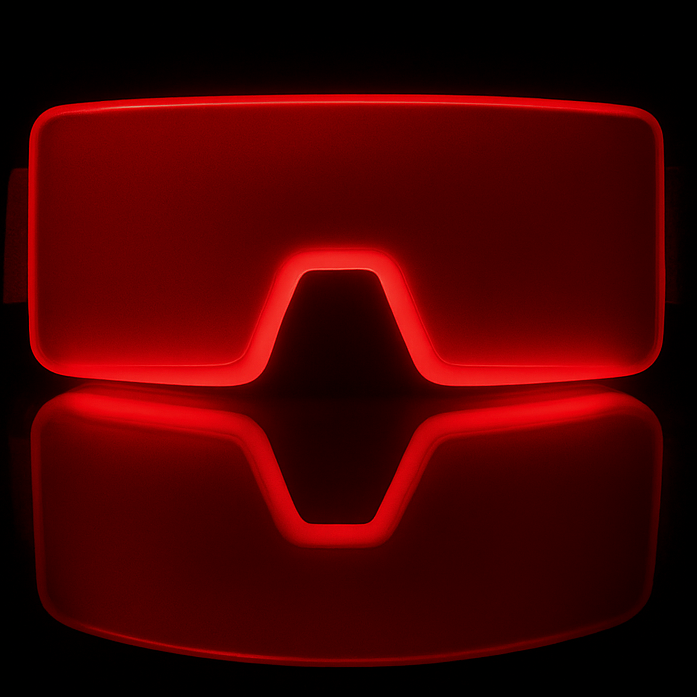
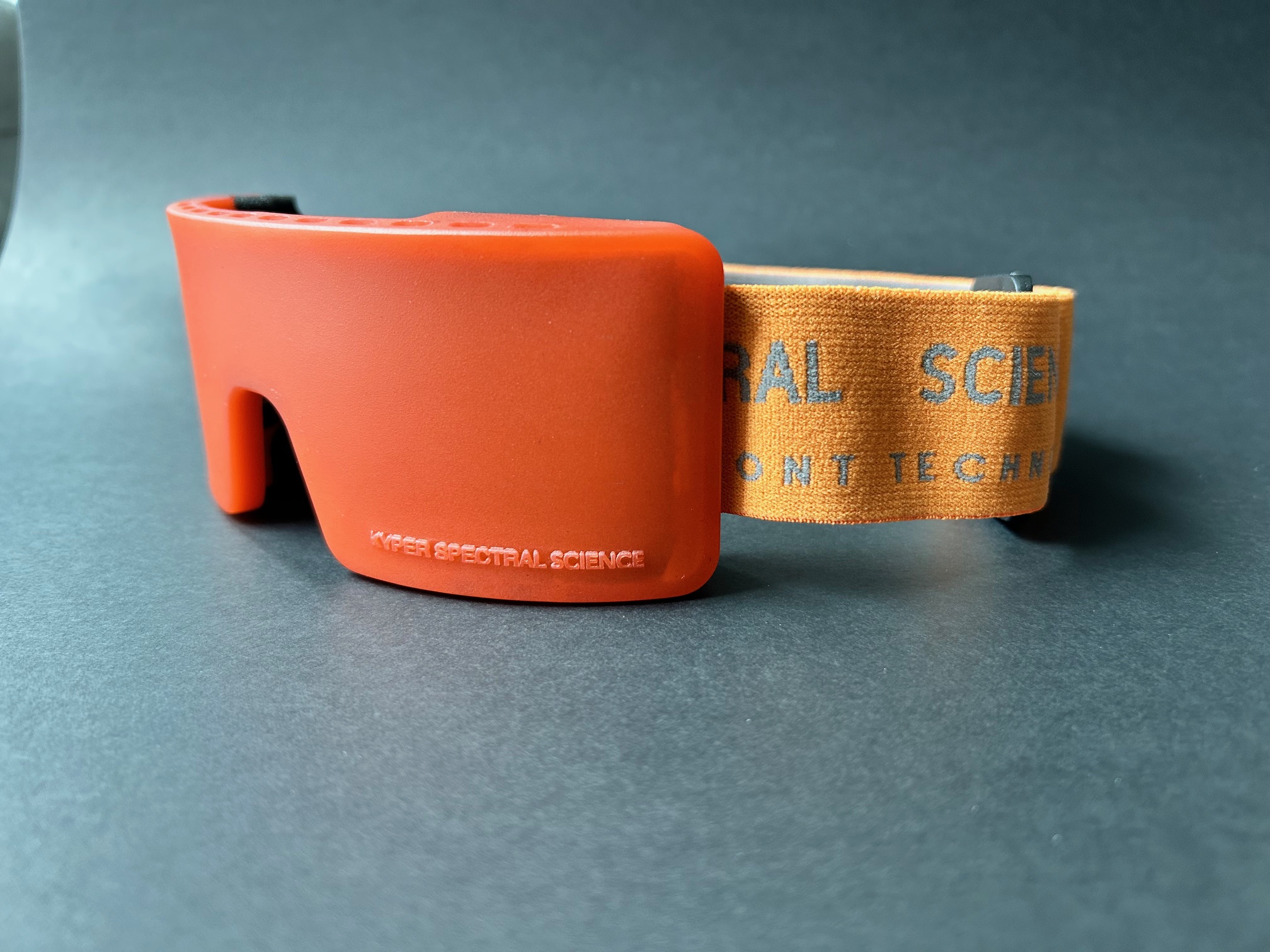
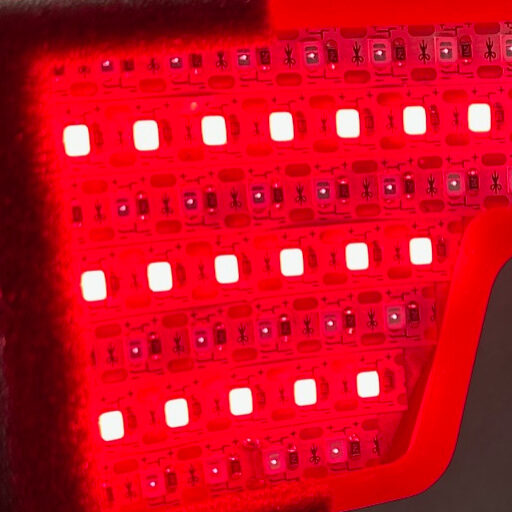
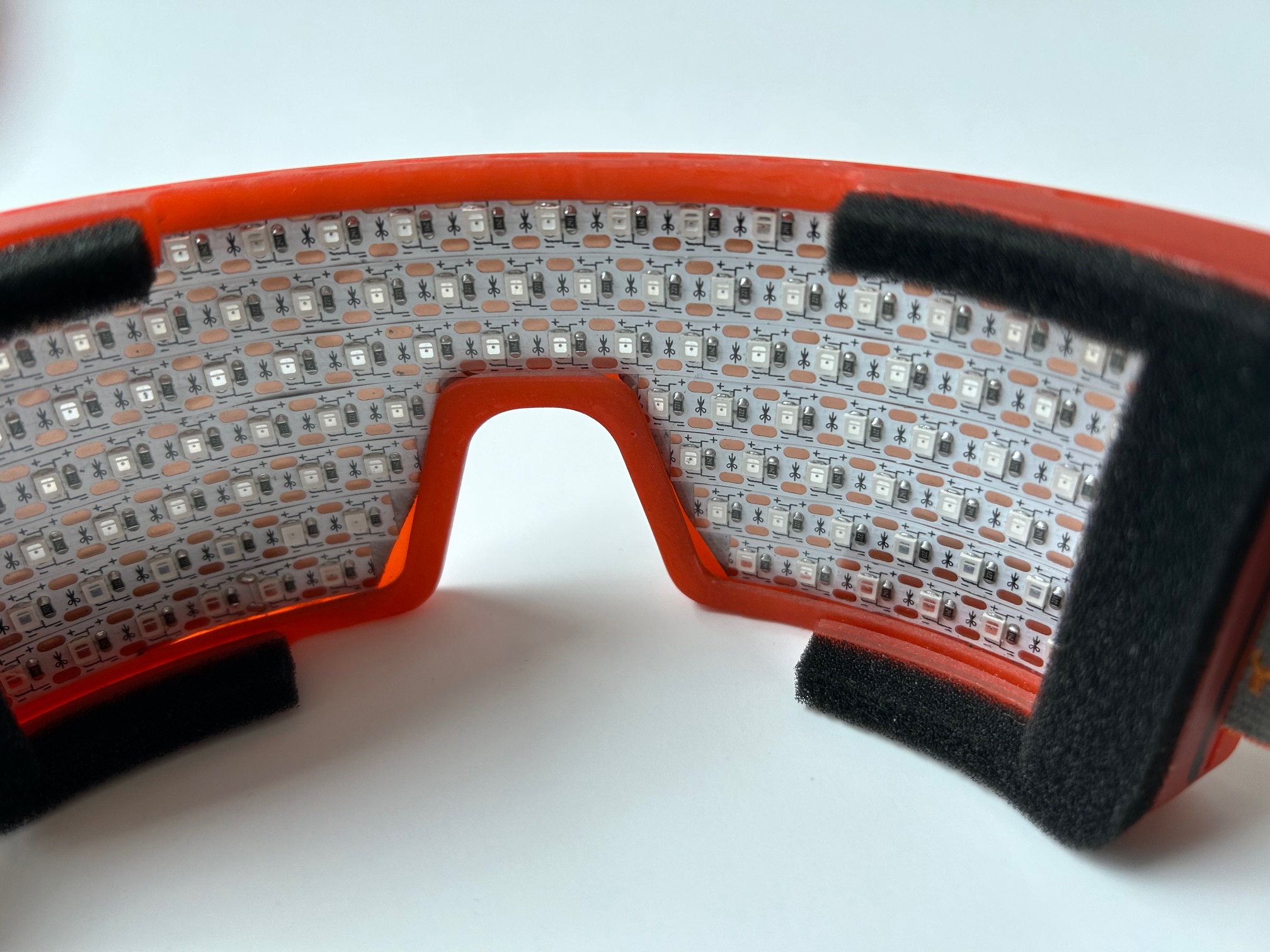
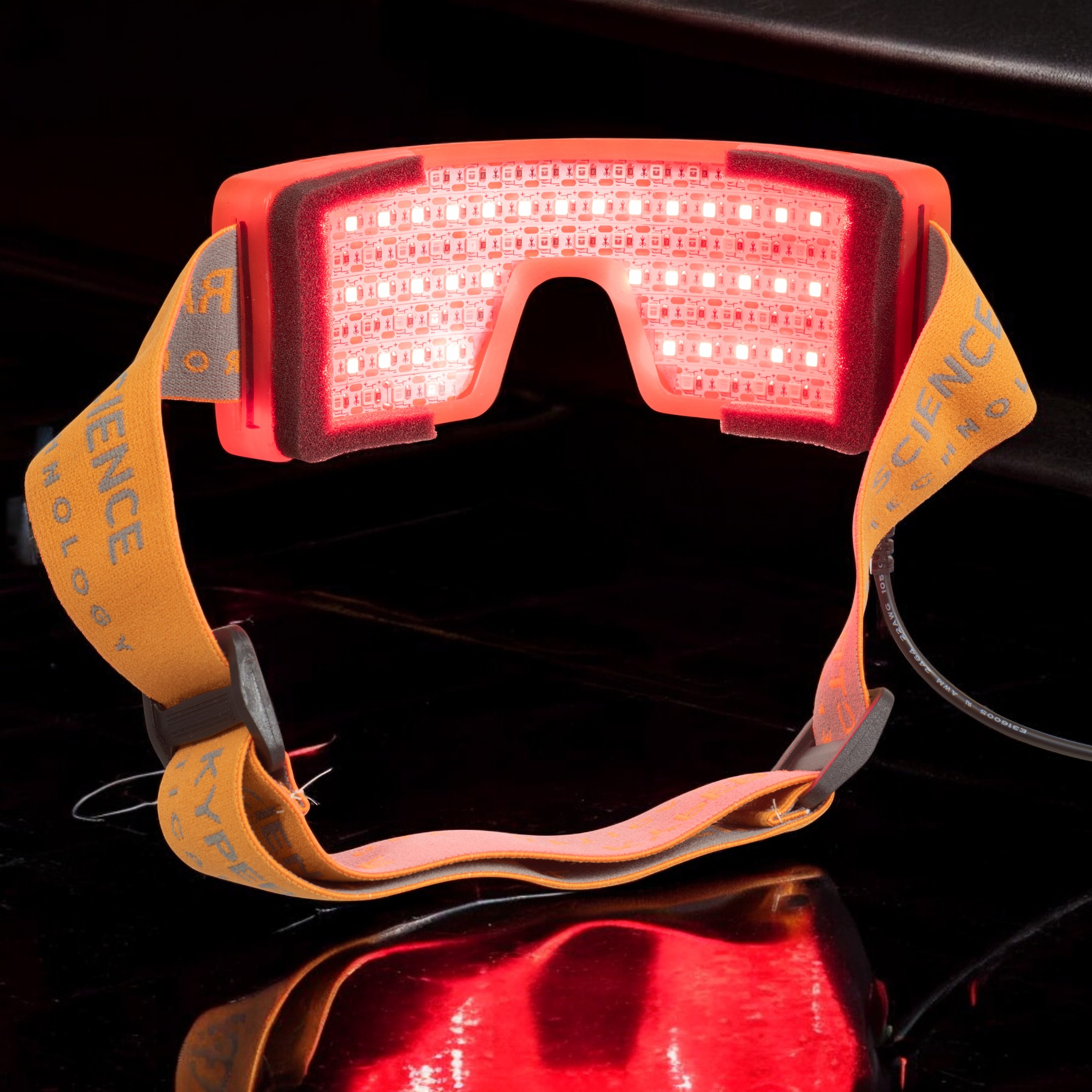
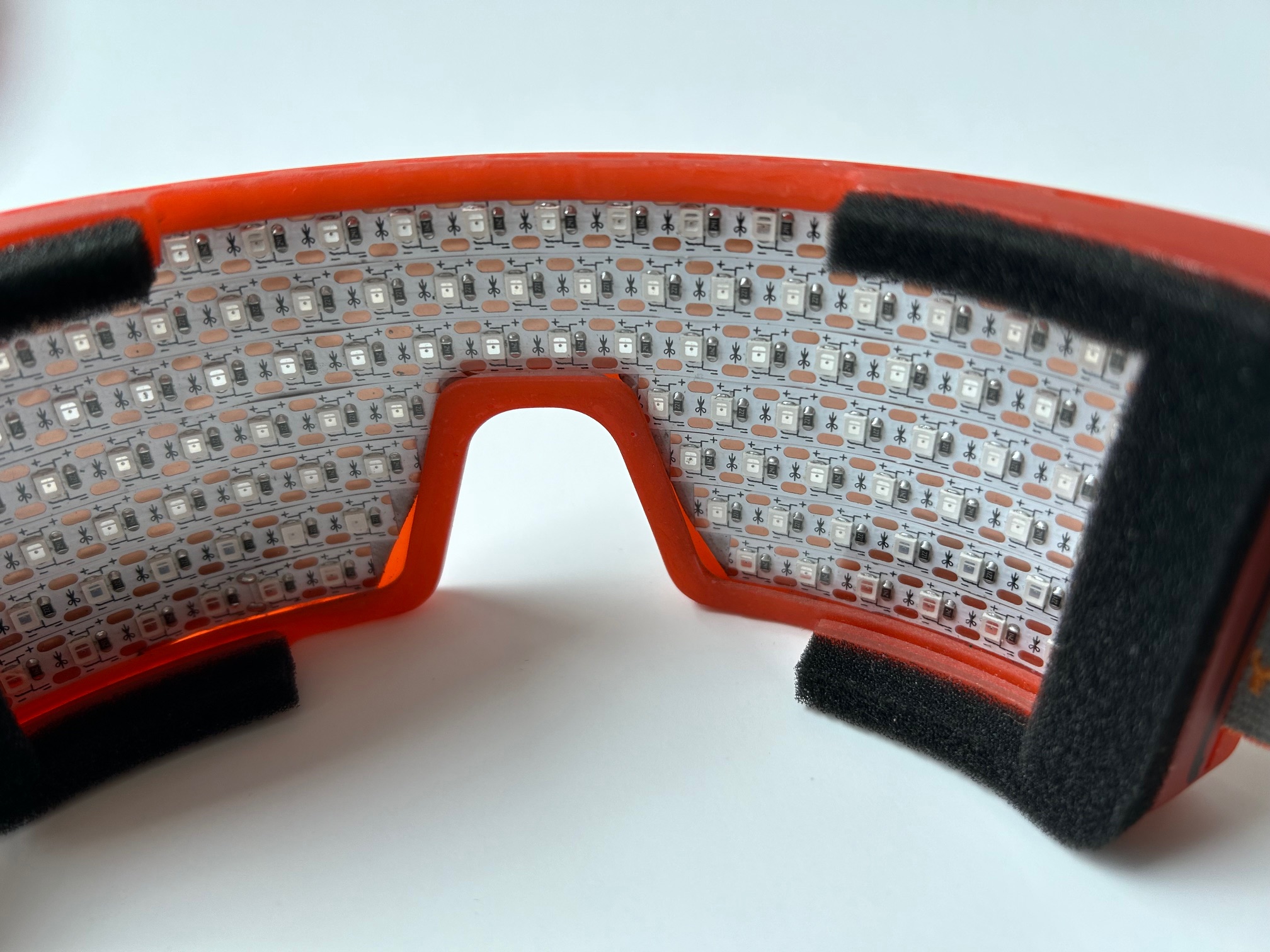
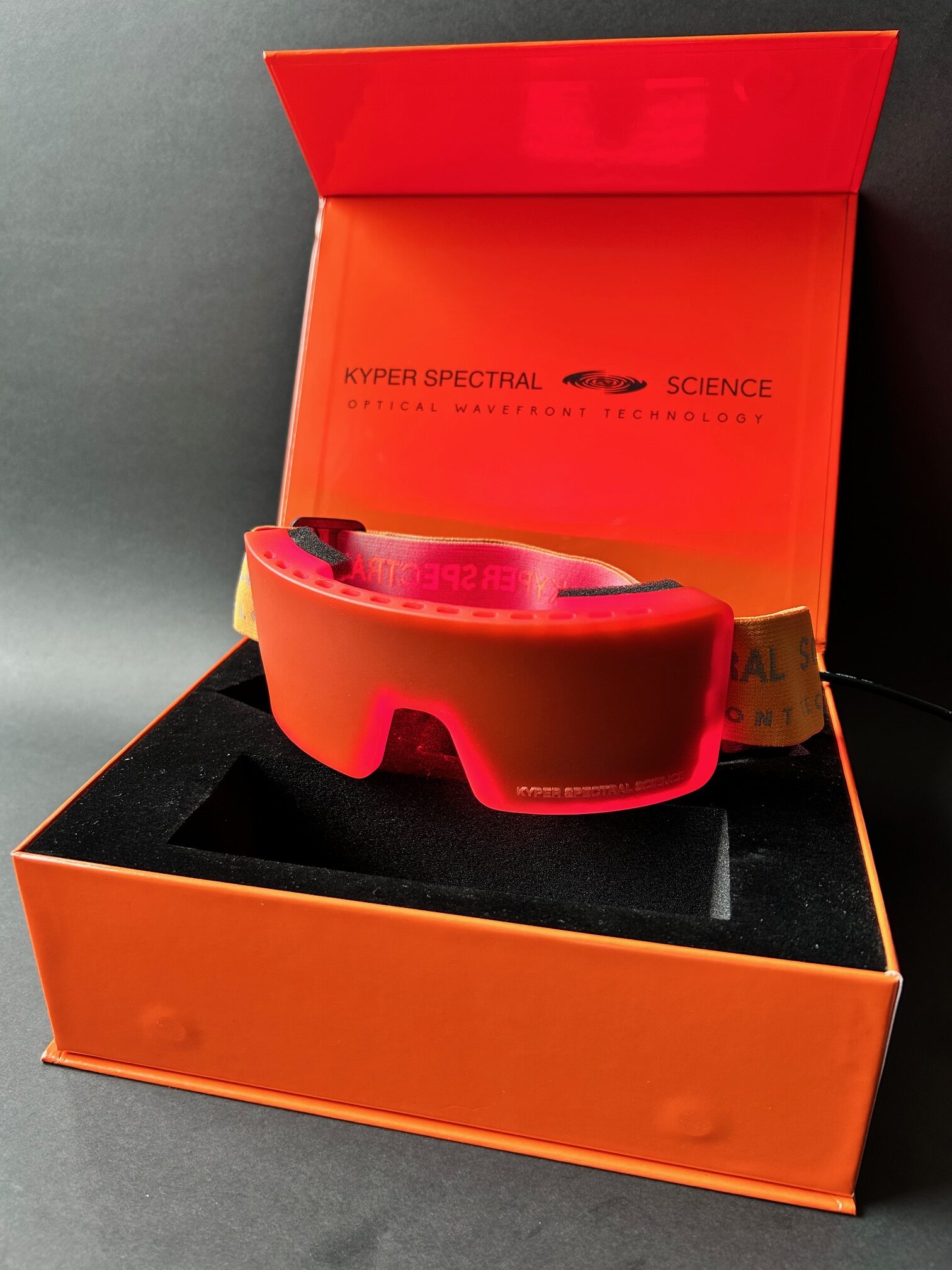
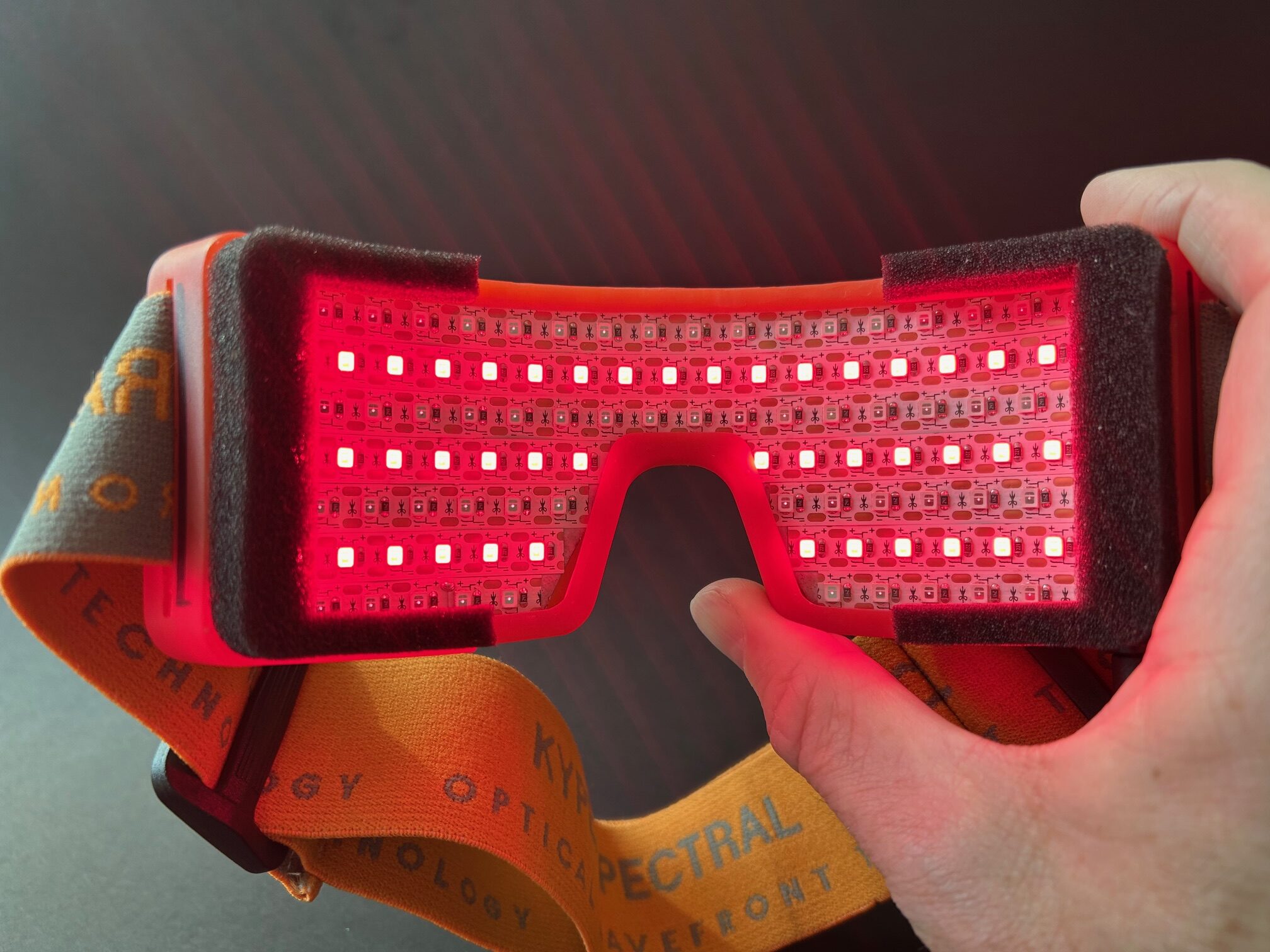
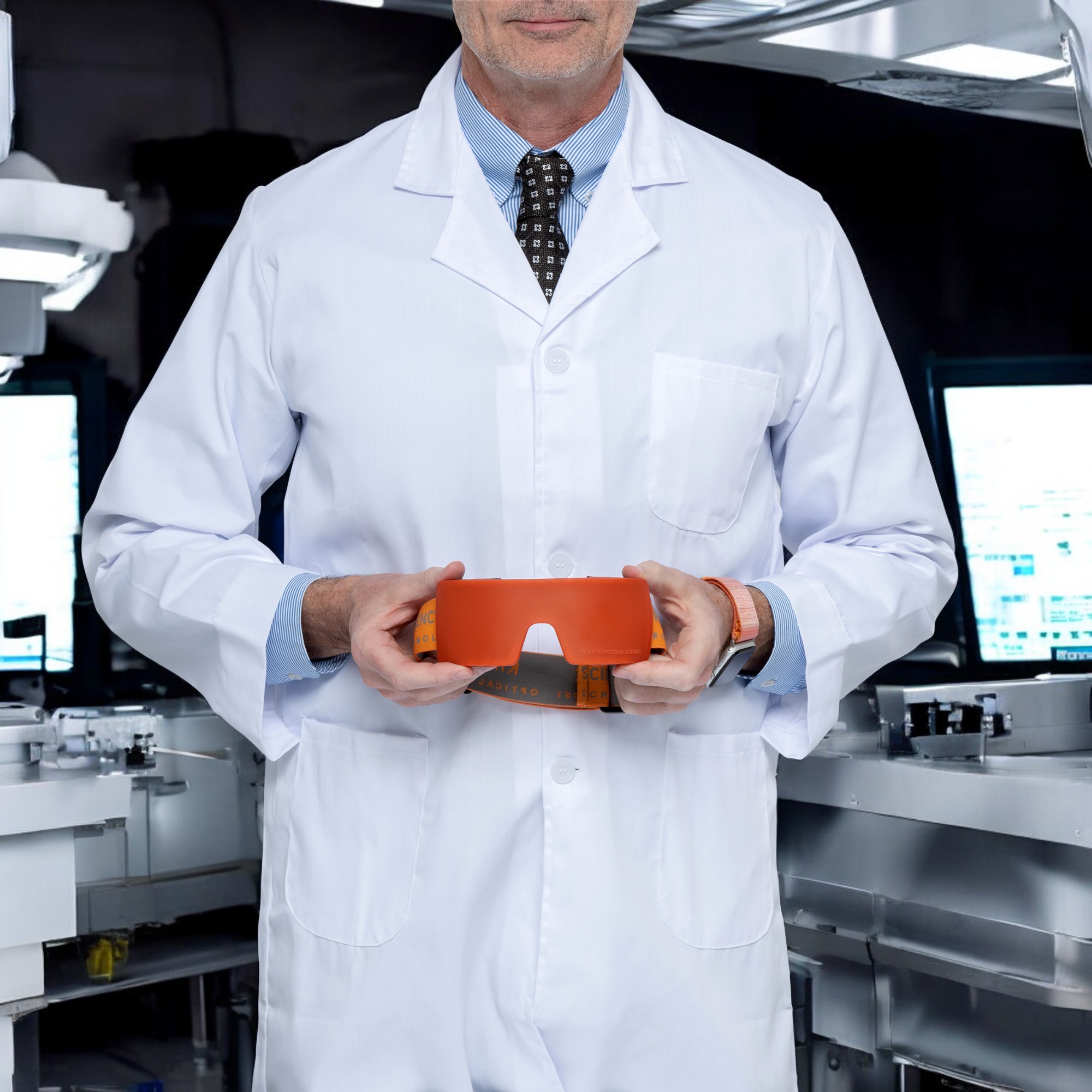
The Spectral WaveFront is a worn mask with dual-band continuous-wave LEDs at 670nm and 810nm, delivering approximately 5 milliwatts per square centimeter to the eyelid environment. A session delivers roughly 4.8 joules per square centimeter total. The light is steady (not pulsed), and the device generates a comfortable therapeutic warmth of around 39°C. It’s USB-A powered and worn directly over both eyes.
For dry eye and MGD support, sessions are run with the eyes closed for 21 minutes, every other day (three to four sessions per week). During flare-ups, daily use is fine. The cadence is built around what photobiomodulation research consistently shows: sustained low-dose exposure works better than infrequent large doses.
What Users Typically Notice and When
- Early sessions: Many people describe the immediate experience as soothing, with reduced eyelid heaviness or grittiness in the hours following a session.
- Two to four weeks of consistent use: This window aligns with where published research starts reporting durable changes in tear film and symptom scores.
- Ongoing use: Photobiomodulation supports gland function rather than providing a finite course of treatment. Use it like exercise — when you stop, the cellular support stops.
Safety Considerations
Light at the wavelengths and intensities used in ocular photobiomodulation research aligns with the dosing windows documented in the peer-reviewed literature. Talk with your eye care professional before incorporating any new modality if you have active cancer under treatment, a recent stem cell transplant or active immune suppression, photosensitivity disorders, or active uveitis or acute ocular inflammation.
Editor’s note: This guide was written by Simon Overington, Founder, Kyper Spectral Science.
For the peer-reviewed studies referenced throughout, see Antwi 2024, Park 2022, Goo 2023, Stonecipher & Potvin 2019, and Solomos 2021 in the research library.
Information is for educational purposes only and should not be interpreted as medical advice.
Related Articles