Condition Focus: Musculoskeletal Disorders — Subacromial Syndrome, Knee OA, Low Back Pain, RA, Carpal Tunnel
This 2017 systematic review and meta-analysis from Clijsen and colleagues took a broad approach, pooling data across five major musculoskeletal disorder categories — subacromial syndrome, knee osteoarthritis, chronic low back pain, rheumatoid arthritis, and carpal tunnel syndrome — to determine whether LLLT produces consistent pain reduction across conditions.
The answer was affirmative across the board. The meta-analysis confirmed statistically significant pain reduction with LLLT compared to sham or no treatment across all five MSD categories. Published in the European Journal of Physical and Rehabilitation Medicine, the analysis drew from multiple randomized controlled trials using both sham-controlled and comparative designs.
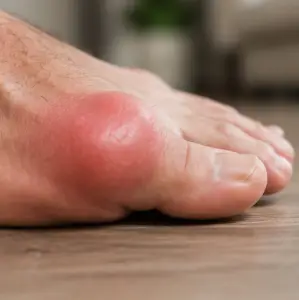
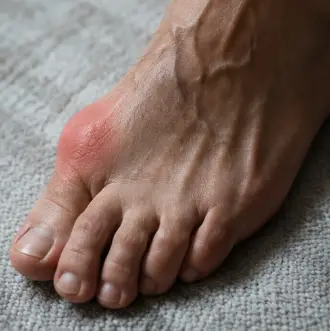
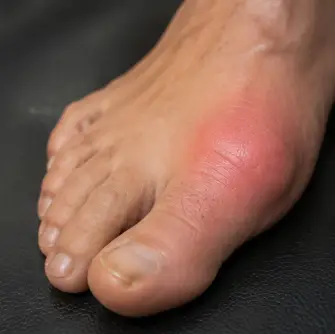
The breadth of this evidence is its strength for the gout context. Rather than relying on the narrow argument that “PBM works for gout because it worked in one gout trial,” this meta-analysis establishes that PBM consistently reduces pain across the full spectrum of musculoskeletal and joint inflammatory conditions. Gout, as a condition characterised by intense joint pain, swelling, and inflammatory tissue damage, fits squarely within this evidence landscape.
The consistency across conditions also addresses a common scepticism about PBM: if it works for everything, can it really work for anything? The meta-analytic approach resolves this by showing that the underlying mechanism — anti-inflammatory and pain-modulating effects at the tissue level — is genuinely shared across these conditions, not coincidental.
G.O.A.T. for Gout Alignment:
The broad MSD evidence base reviewed here encompasses the joint-specific inflammatory pain that the G.O.A.T. is designed to address. The consistent pain reduction across conditions with different etiologies but shared inflammatory pathways supports the G.O.A.T.’s positioning for gout as part of the broader PBM evidence base for musculoskeletal pain.
Link to original research here
Editor’s note: This broad meta-analysis complements the knee OA-specific meta-analysis by Oliveira et al 2024. For acute pain and return-to-activity evidence in musculoskeletal injury, see Morgan et al 2022. The umbrella review covering PBM’s effects on pain across multiple health outcomes is reported in Son et al 2023. For whole-body PBM pain evidence with triple-blind methodology, see Navarro-Ledesma et al 2021.
Related Articles
- PBM for Knee OA Pain and Disability: Meta-Analysis – Oliveira et al 2024
- PBM on Pain and Return to Play of Injured Athletes – Morgan et al 2022
- Effects of PBM on Multiple Health Outcomes: Umbrella Review – Son et al 2023
- Whole-Body PBM on Pain and QoL: Triple-Blind RCT – Navarro-Ledesma et al 2021
- PBM for Musculoskeletal Disorders and OA with NSAID Comparison – 2019
Key Takeaways
- Meta-analysis confirms LLLT reduces pain across five musculoskeletal disorder categories
- Consistent effects in RA, knee OA, low back pain, carpal tunnel, and subacromial syndrome
- Cross-condition consistency supports the shared inflammatory mechanism that applies to gout
- Published in European Journal of Physical and Rehabilitation Medicine
Study Overview
| Study Type: | Systematic review with meta-analysis |
| Wavelength(s): | Multiple LLLT wavelengths across included trials |
| Treatment Protocol: | Varies across included studies |
| Sample Size: | Multiple RCTs pooled across 5 MSD categories |
| Primary Outcome: | Significant pain reduction vs. sham/no treatment across all MSD categories |
Full Citation
Clijsen R, Brunner A, Barbero M, et al. (2017). Effects of low-level laser therapy on pain in patients with musculoskeletal disorders: a systematic review and meta-analysis. European Journal of Physical and Rehabilitation Medicine, 53(4), 603–610. View Publication