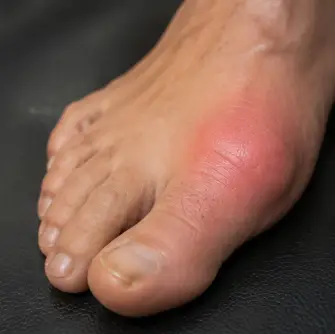
Condition Focus: Musculoskeletal Disorders, Osteoarthritis, Rheumatoid Arthritis — NSAID Comparison
This 2019 review spans two decades of photobiomodulation research in musculoskeletal disorders, with a particular focus on comparing PBM outcomes to NSAID therapy. Published in Photobiomodulation, Photomedicine, and Laser Surgery, it examines evidence across osteoarthritis, rheumatoid arthritis, low back pain, and carpal tunnel syndrome.
The central finding is direct: PBM can match NSAID efficacy for pain relief in musculoskeletal conditions, without the gastrointestinal, renal, and cardiovascular side effects that limit NSAID use. The review notes that PBM technology has evolved significantly over the 20-year period examined, with increasing power densities and energy levels producing improved outcomes — suggesting that earlier studies using lower parameters may have underestimated PBM’s potential.
For the gout population, this review addresses a critical clinical reality. Many gout patients are prescribed NSAIDs as first-line flare management, but a substantial proportion cannot safely take them. Chronic kidney disease — which is both a risk factor for gout and a consequence of long-term hyperuricaemia — is a contraindication for NSAID use. Cardiovascular disease, another frequent gout comorbidity, adds further NSAID risk. And for patients already on anticoagulants, the gastrointestinal bleeding risk from NSAIDs becomes unacceptable.
PBM offers these patients a non-pharmacological alternative that addresses the same inflammatory pathways without systemic drug exposure.
G.O.A.T. for Gout Alignment:
The G.O.A.T. is positioned as exactly this kind of alternative: a home-use PBM device that delivers clinically relevant energy density to the inflamed joint without the systemic side effects of oral NSAIDs. The 20-year evidence trajectory reviewed here supports the maturation of PBM as a legitimate therapeutic option, not an experimental curiosity.
Link to original research here
Editor’s note: The NSAID-comparison positioning is supported by direct gout evidence in Soriano et al 2006, where PBM matched diclofenac in acute gout. For acute pain outcomes in sports and musculoskeletal injury, see Morgan et al 2022. The autoimmune and inflammatory overlap across MSD conditions is reviewed in Wickenheisser et al 2023. For the synoviocyte-level evidence in RA, see Ryu et al 2023.
Related Articles
- PBM of Pain and Inflammation in Microcrystalline Arthropathies – Soriano et al 2006
- PBM on Pain and Return to Play of Injured Athletes – Morgan et al 2022
- Effects of LLLT on Pain in Musculoskeletal Disorders: Meta-Analysis – Clijsen et al 2017
- PBM Ameliorates Inflammatory Parameters in Fibroblast-Like Synoviocytes – Ryu et al 2023
- PBM in Inflammatory, Musculoskeletal, and Autoimmune Disorders – Wickenheisser et al 2023
Key Takeaways
- PBM matches NSAID efficacy for musculoskeletal pain relief across 20 years of evidence
- Zero gastrointestinal, renal, or cardiovascular side effects — critical for gout’s comorbidity profile
- Technology evolution over 20 years has improved PBM outcomes with better parameters
- Addresses the clinical gap for gout patients who cannot safely take NSAIDs
Study Overview
| Study Type: | Review (20+ years of evidence) |
| Wavelength(s): | Multiple LLLT/PBM wavelengths |
| Treatment Protocol: | Varies across reviewed studies |
| Sample Size: | Review spanning OA, RA, LBP, CTS studies |
| Primary Outcome: | PBM matches NSAID efficacy without systemic side effects |
Full Citation
Applications of photobiomodulation therapy to musculoskeletal disorders and osteoarthritis with relevance to Canada. (2019). Photobiomodulation, Photomedicine, and Laser Surgery. View Publication