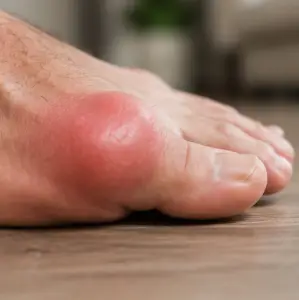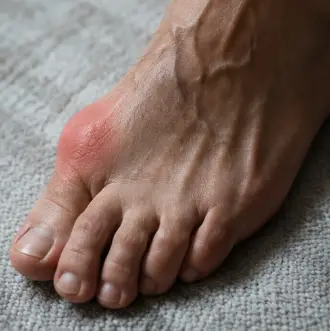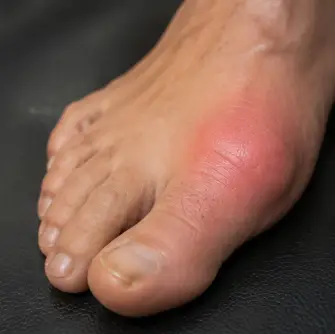
Condition Focus: Acute Gouty Arthritis
This clinical study from Zhu and colleagues investigated a combination therapy of acupuncture with infrared light irradiation for managing acute gout flares, comparing outcomes against standard NSAID treatment. Published in the Chinese Acupuncture & Moxibustion journal, it provides one of the few direct comparisons between light-based therapy and pharmaceutical intervention in acute gout.
Patients presenting with acute gouty arthritis were assigned to receive either the combination of acupuncture with infrared irradiation or conventional NSAID therapy. The infrared component delivers broad-spectrum light energy that penetrates tissue to support circulation, reduce local inflammation, and modulate pain signalling — mechanisms that overlap with the more targeted wavelength-specific effects of photobiomodulation.
The combination therapy matched NSAIDs for pain relief in acute gout, achieving comparable outcomes without the gastrointestinal and renal risks that make NSAIDs problematic for many gout patients. This is particularly relevant given that gout patients are often older and frequently have comorbidities — kidney disease, hypertension, cardiovascular conditions — that make NSAID use risky or contraindicated.
While the study used broad-spectrum infrared rather than specific PBM wavelengths, and combined the light therapy with acupuncture, it adds to the small but growing body of evidence that light-based interventions can serve as effective alternatives to NSAIDs in acute gout management.
G.O.A.T. for Gout Alignment:
The G.O.A.T.’s 850 nm wavelength falls within the near-infrared range used in this study. While the G.O.A.T. delivers targeted dual-wavelength PBM rather than broad-spectrum infrared, the underlying tissue interactions — improved perfusion, inflammatory mediator modulation, and pain pathway interference — are mechanistically related. The G.O.A.T. offers a more precise, repeatable dose than the broad infrared approach used here.
Link to original research here
Editor’s note: This is one of three gout-specific studies in our library. For the more rigorous randomized comparison of laser therapy versus diclofenac in acute gout, see Soriano et al 2006. The preclinical gout model using combined LASER + LED on dorsal root ganglia is described in Pinto et al 2023. For a broader review of PBM as an NSAID alternative across musculoskeletal conditions, see PBM for Musculoskeletal Disorders 2019. The neutrophil infiltration pathways relevant to acute gout flares are explored in Alves et al 2014.
Related Articles
- PBM of Pain and Inflammation in Microcrystalline Arthropathies – Soriano et al 2006
- Acute Effects of PBM Applied on DRG in Gout Model – Pinto et al 2023
- PBM for Musculoskeletal Disorders and OA with NSAID Comparison – 2019
- Anti-Inflammatory Effect of PBM on COX-2 and PGE₂ in Joint Inflammation – Albertini et al 2007
- Effect of PBM on Inflammatory Mediators and Neutrophils in Joint Inflammation – Alves et al 2014
Key Takeaways
- Infrared irradiation combined with acupuncture matched NSAID efficacy for acute gout pain relief
- Light-based therapy achieved comparable outcomes without gastrointestinal or renal side effects
- Supports the broader case for non-pharmacological light therapy in acute gout management
- Particularly relevant for patients with comorbidities that contraindicate NSAID use
Study Overview
| Study Type: | Clinical trial (comparative) |
| Wavelength(s): | Broad-spectrum infrared |
| Treatment Protocol: | Acupuncture + infrared irradiation, acute treatment course |
| Sample Size: | Not specified in English abstract |
| Primary Outcome: | Pain relief equivalence vs. NSAID therapy in acute gout |
Full Citation
Zhu J, et al. (2011). Acupuncture combined with infrared irradiation for acute gouty arthritis. Chinese Acupuncture & Moxibustion. View Publication