Condition Focus: Connective Tissue Repair — Bone, Cartilage, and Tendon
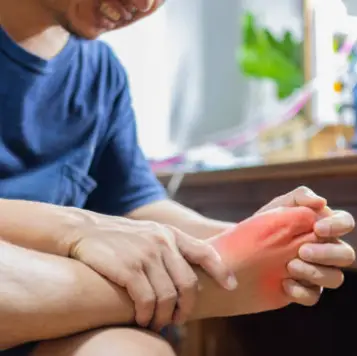
Chronic gout damages three types of connective tissue simultaneously: cartilage erodes from repeated inflammatory assaults, subchondral bone is resorbed through osteoclast activation, and tendons can develop tophaceous deposits that impair function. This review from Houreld and colleagues is the only paper in our library that addresses PBM’s effects on all three tissue types in a single publication.
The review covers osteoblasts (bone-forming cells), osteocytes (bone-maintaining cells embedded in mineralised matrix), chondrocytes (cartilage cells), and tenocytes (tendon cells). For each cell type, the authors summarise the evidence for PBM’s effects on proliferation, differentiation, extracellular matrix synthesis, and gene expression modulation.
The key finding across all cell types is parameter-dependence: PBM can stimulate or inhibit connective tissue repair depending on wavelength, power density, and energy density. This is not a limitation — it is the basis for rational device design. By selecting parameters that stimulate the repair pathways in the cell types most relevant to the target condition, a device can be optimised for a specific clinical application.
For gout, the relevant cell types are chondrocytes (acute and chronic cartilage damage), osteoblasts and osteoclasts (bone erosion from chronic tophi and periarticular inflammation), and potentially tenocytes (tendon involvement in advanced tophaceous gout). A device designed to support all three repair pathways simultaneously would address the full spectrum of chronic gout joint damage.
G.O.A.T. for Gout Alignment:
The G.O.A.T.’s dual wavelengths (660 nm + 850 nm) fall within the ranges identified as effective for multiple connective tissue cell types. The review’s emphasis on parameter-dependence validates the G.O.A.T.’s specific dosimetry choices rather than supporting a “any light works” narrative.
Link to original research here
Editor’s note: For focused evidence on each tissue type covered here, the bone protection evidence with RANKL/OPG data is in Hong et al 2022. The cartilage-specific human chondrocyte data is in Oliveira et al 2025. The cell-type specific dose-response for bone cells is mapped in Na et al 2018. The stem cell evidence for tissue regeneration capacity is reviewed in Ahrabi et al 2020.
Related Articles
- PBM Effects on Bone Remodeling in Osteoblast-Osteoclast Co-Culture – Hong et al 2022
- NIR PBM Stimulates Cartilage Matrix Synthesis in Human Chondrocytes – Oliveira et al 2025
- Dose Analysis of PBM on Osteoblast, Osteoclast, and Osteocyte – Na et al 2018
- Effect of PBM on MSC Differentiation and Proliferation – Ahrabi et al 2020
- PBM in Promoting Cartilage Regeneration – 2025
Key Takeaways
- Only paper covering PBM effects on all three gout-relevant connective tissues: bone, cartilage, tendon
- Parameter-dependence confirmed across all cell types — validates specific device dosimetry
- Covers osteoblasts, osteocytes, chondrocytes, and tenocytes in one review
- Chronic gout damages all three tissues — a comprehensive repair approach is needed
Study Overview
| Study Type: | Narrative review |
| Wavelength(s): | Multiple (red + NIR) |
| Treatment Protocol: | Varies across reviewed studies |
| Sample Size: | Review of bone, cartilage, and tendon cell studies |
| Primary Outcome: | Parameter-dependent stimulation of connective tissue repair across cell types |
Full Citation
Houreld NN, et al. (2022). Photobiomodulation, cells of connective tissue and repair: bone, cartilage, tendon. Photonics, 9(9), 618. View Publication