Condition focus: Myopia Control & Refractive Development
Myopia has reached epidemic proportions globally, with limited effective interventions to slow progression during critical childhood development years. This study investigated red light irradiation as a novel myopia control approach, examining mechanisms of action and clinical efficacy. Researchers conducted both animal model studies and clinical trials evaluating low-level red light (650-670 nm) treatment effects on axial elongation, choroidal thickness, refractive error progression, and underlying biological mechanisms in myopic children.
Results demonstrated that daily red light treatment (typically 3 minutes twice daily at 650 nm) significantly slowed axial elongation and myopia progression compared to untreated controls. In animal models, red light exposure increased choroidal thickness, enhanced dopamine synthesis in the retina, and modulated scleral remodeling to reduce eye elongation. Clinical trials in myopic children showed reduced progression rates by approximately 60-70% over 6-12 month periods. The treatment enhanced choroidal perfusion as measured by optical coherence tomography, suggesting improved metabolic support to the outer retina and sclera. Mechanistic analysis revealed that red light stimulated mitochondrial function in retinal cells, increased retinal dopamine—a key regulator of eye growth—and modulated gene expression in scleral tissue to reduce pathological remodeling. Safety monitoring showed no adverse effects on retinal function or structure.
WaveFront Alignment:
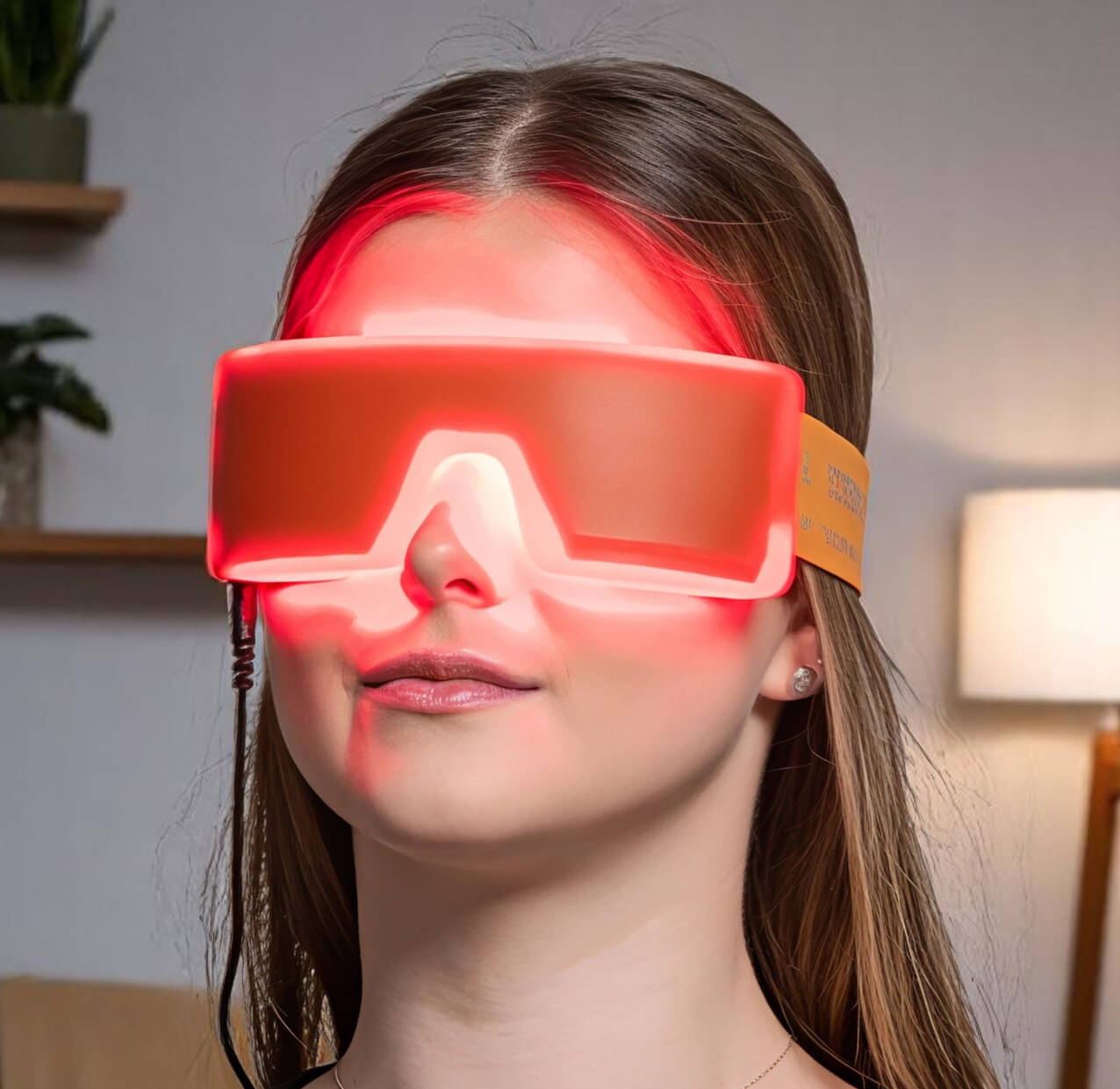
Zhu’s demonstration that red light (650-670 nm) controls myopia through enhanced choroidal perfusion and dopamine modulation provides mechanistic context for photobiomodulation’s effects on eye growth regulation, supporting potential applications beyond the Spectral WaveFront’s primary indications.
Read full article here
Editor’s note: Zhu 2022 provides mechanistic overview of red light myopia control. For related vascular mechanisms, see Shurygina 2009. Broader myopia photobiomodulation evidence appears in recent comprehensive review Rucker 2024. Mitochondrial mechanisms relevant to choroidal function in Gkotsi 2014 and Beirne 2017.
Related Articles
- Effect of Infrared Laser on Orbital Blood Circulation in Myopia – Shurygina 2009
- Red Light and Myopia: Comprehensive Review 2024 – Rucker 2024
- Recharging Mitochondrial Batteries in Old Eyes – Gkotsi 2014
- Photostimulation of Mitochondria for Retinal Neurodegeneration – Beirne 2017
- Increases in Central Retinal Artery Blood Flow – Mii 2007
Key Takeaways
- Daily red light (650 nm) treatment reduced myopia progression by 60-70% over 6-12 months in children
- Enhanced choroidal thickness and perfusion, increased retinal dopamine synthesis, modulated scleral remodeling
- Animal models confirmed red light effects on eye elongation through metabolic and neurotransmitter pathways
- No adverse effects on retinal function or structure during safety monitoring
Study Overview
| Study Type: | Animal models and clinical trials (mechanistic review) |
| Wavelength(s): | 650-670 nm (red light) |
| Treatment Protocol: | Typically 3 minutes twice daily in pediatric myopia |
| Sample Size: | Animal models and clinical trial populations |
| Primary Outcome: | 60-70% reduction in myopia progression through choroidal, dopaminergic, and scleral mechanisms |
Full Citation
Zhu Z, Huang T, He J, Zhang J, Du C. (2022). Red light irradiation as an intervention for myopia. Adv Ophthalmol Pract Res, 2(1):100031. View Publication