Condition focus: Diabetic Retinopathy & Retinal Vascular Health
This study investigated whether low-intensity far-red light could prevent or reduce early pathological changes associated with diabetic retinopathy. Using both in vivo animal models and in vitro cell culture systems, researchers exposed diabetic retinal tissue to far-red wavelengths and assessed markers of vascular dysfunction, oxidative stress, and inflammatory activation. Results demonstrated that far-red light exposure significantly inhibited early lesion formation, reduced vascular permeability, and mitigated oxidative damage in diabetic retinal tissue.
The findings suggest that wavelength-specific photobiomodulation may intervene at early stages of diabetic retinopathy pathogenesis, potentially slowing disease progression through metabolic and anti-inflammatory mechanisms rather than requiring invasive interventions like anti-VEGF injections or laser photocoagulation.
WaveFront Alignment:
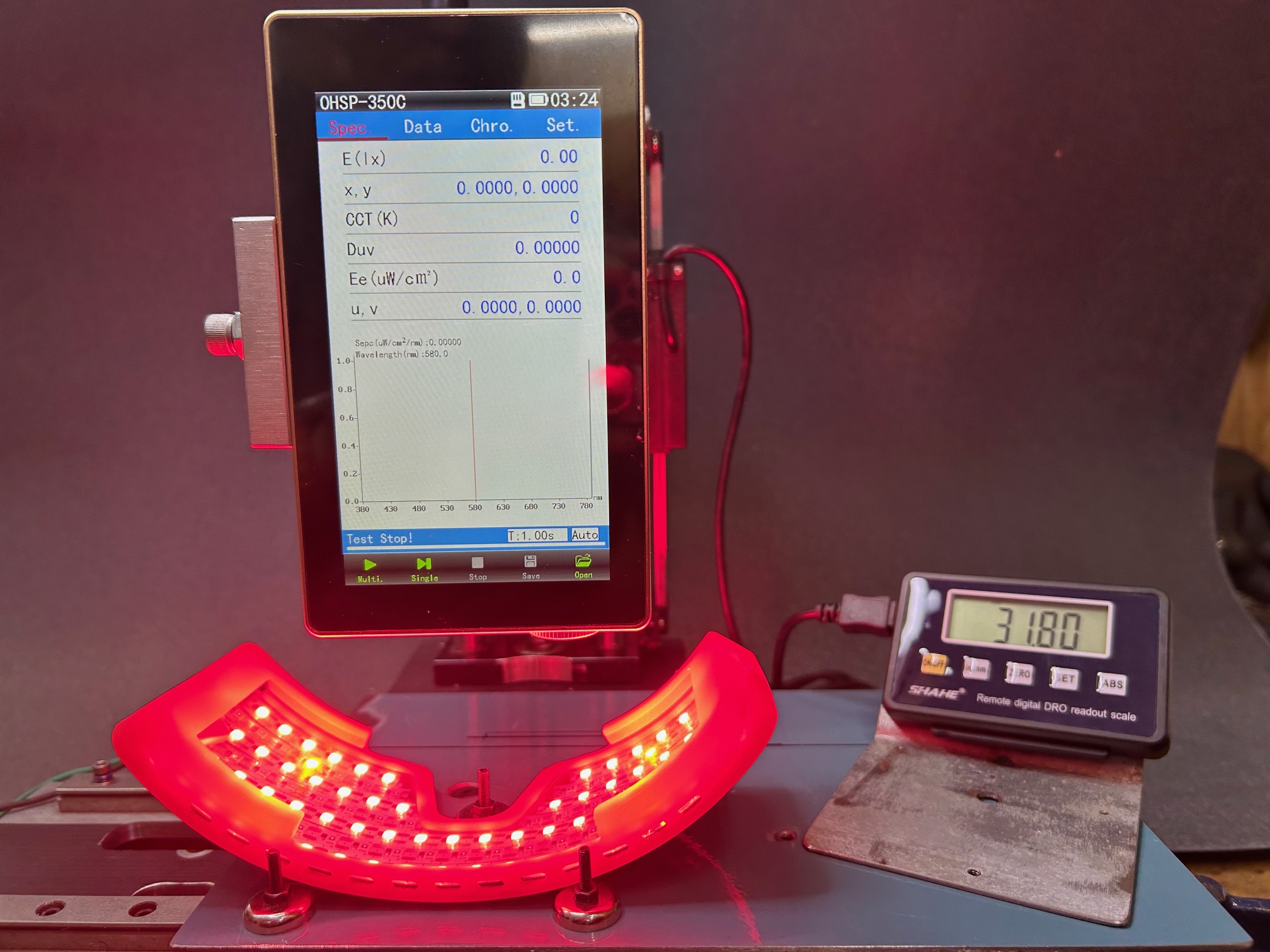
Tang’s far-red light findings align with the Spectral WaveFront’s 670 nm wavelength, which falls within the red-to-far-red spectrum. The observed inhibition of early diabetic lesions supports WaveFront’s metabolic support approach targeting oxidative stress and vascular dysfunction in retinal tissue compromised by metabolic disease.
Link to original research here
Editor’s note: Tang 2013 provides mechanistic evidence for far-red light intervention in early diabetic retinopathy. For clinical translation in diabetic macular edema, see Kim 2022. Broader mechanistic pathways in diabetic retina are reviewed in Roy 2016. For NIR PBM in retinal vein occlusion macular oedema, see Cornish 2021. Mitochondrial ATP support relevant to metabolic retinal disease is detailed in Gkotsi 2014.
Related Articles
- PBM Therapy for Center-Involved Diabetic Macular Edema – Kim 2022
- Mechanistic Insights into Diabetic Retina Pathology – Roy 2016
- NIR PBM for Retinal Vein Occlusion Macular Oedema – Cornish 2021
- Recharging Mitochondrial Batteries in Old Eyes – Gkotsi 2014
- PBM in Non-Center-Involving Diabetic Macular Oedema – Tang 2014
Key Takeaways
- Low-intensity far-red light inhibited early lesion formation in diabetic retinopathy models
- Reduced vascular permeability and oxidative damage in diabetic retinal tissue
- Demonstrated preventive potential at early disease stages before invasive interventions required
- Supported metabolic and anti-inflammatory mechanisms as therapeutic approach in diabetic retina
Study Overview
| Study Type: | Animal model and in vitro study |
| Wavelength(s): | Far-red light (specific wavelength in protocol) |
| Treatment Protocol: | Low-intensity far-red exposure in diabetic models |
| Sample Size: | Diabetic retinopathy animal models and cell cultures |
| Primary Outcome: | Inhibited early DR lesions; reduced vascular permeability and oxidative stress |
Full Citation
Tang J, et al. (2013). Low-intensity far-red light inhibits early lesions that contribute to diabetic retinopathy: in vivo and in vitro. Investigative Ophthalmology & Visual Science, 54(5):3681-3690. View Publication