Condition focus: Diabetic Macular Edema (DME) & Retinal Metabolic Stress
From April 2019 to February 2020, 135 adults were randomly assigned to either PBM (n = 69) or placebo (n = 66); median age was 62 years, 37% were women, and 82% were White. The median device compliance was 92% with PBM and 95% with placebo. OCT central subfield thickness increased from baseline to 4 months by a mean of 13 μm in PBM eyes and 15 μm in placebo eyes, with the mean difference being −2 μm (P = 0.84). CI-DME, based on DRCR Retina Network sex- and machine-based thresholds, was present in 61 (90%) PBM eyes and 57 (86%) placebo eyes at 4 months.
Visual acuity decreased by a mean of −0.2 letters and −0.6 letters in the PBM and placebo groups, respectively (difference = 0.4 letters; P = 0.64). There were 8 adverse events possibly related to the PBM device and 2 adverse events possibly related to the placebo device. None were serious. While group-level improvements were not demonstrated in this short trial, the study supports that 670 nm PBM was well tolerated and provides an important safety foundation for exploring PBM as an adjunctive approach in CI-DME.
WaveFront Alignment:
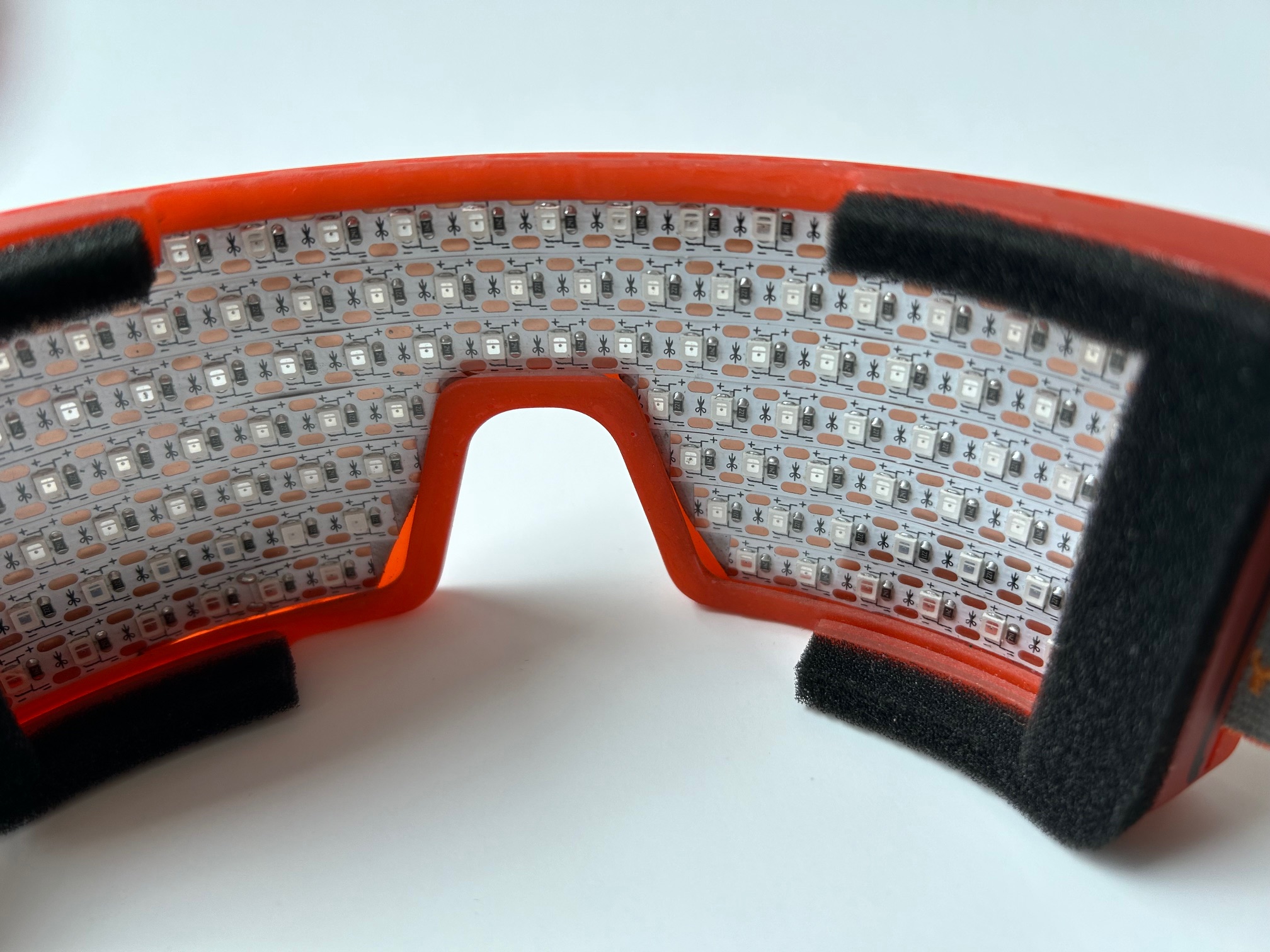
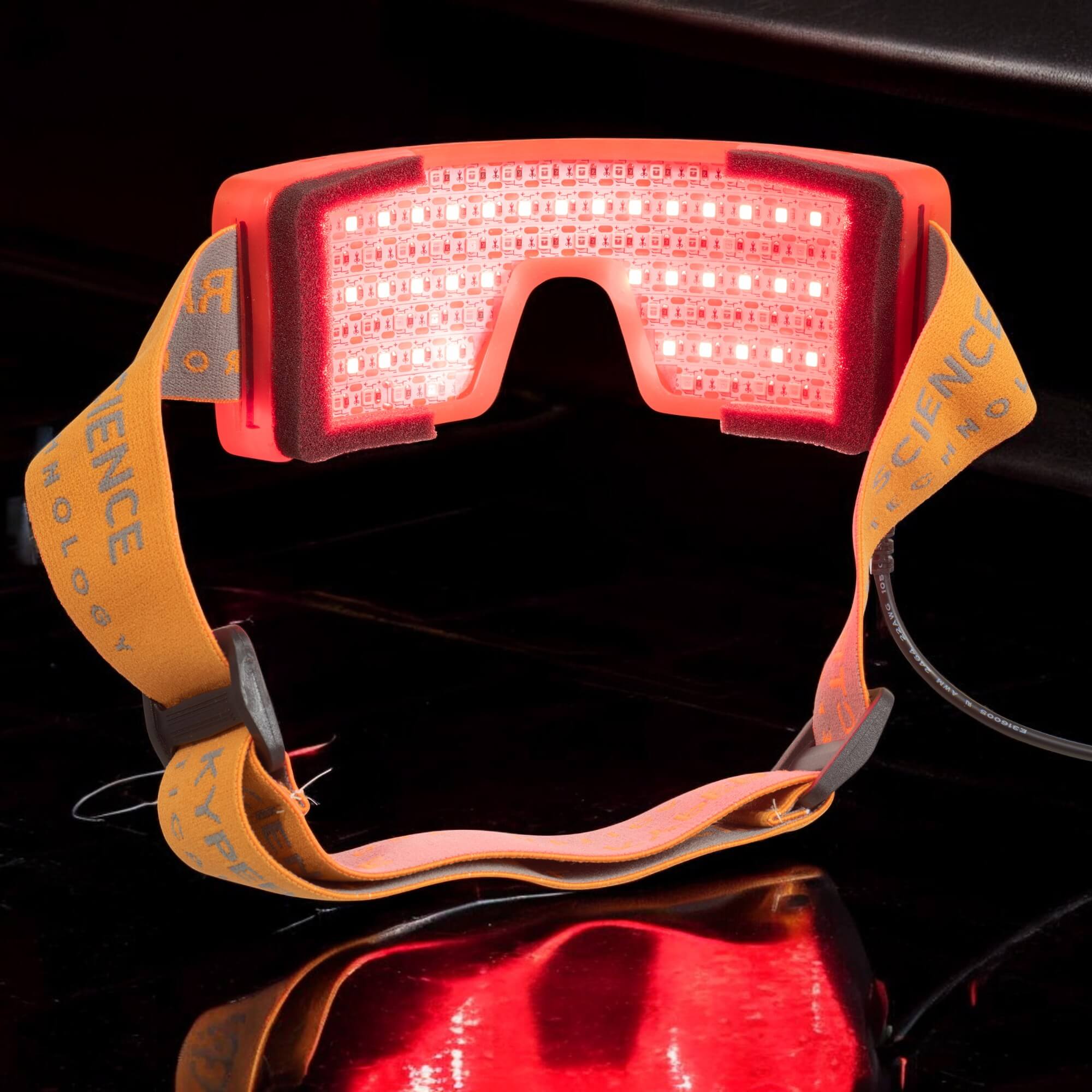
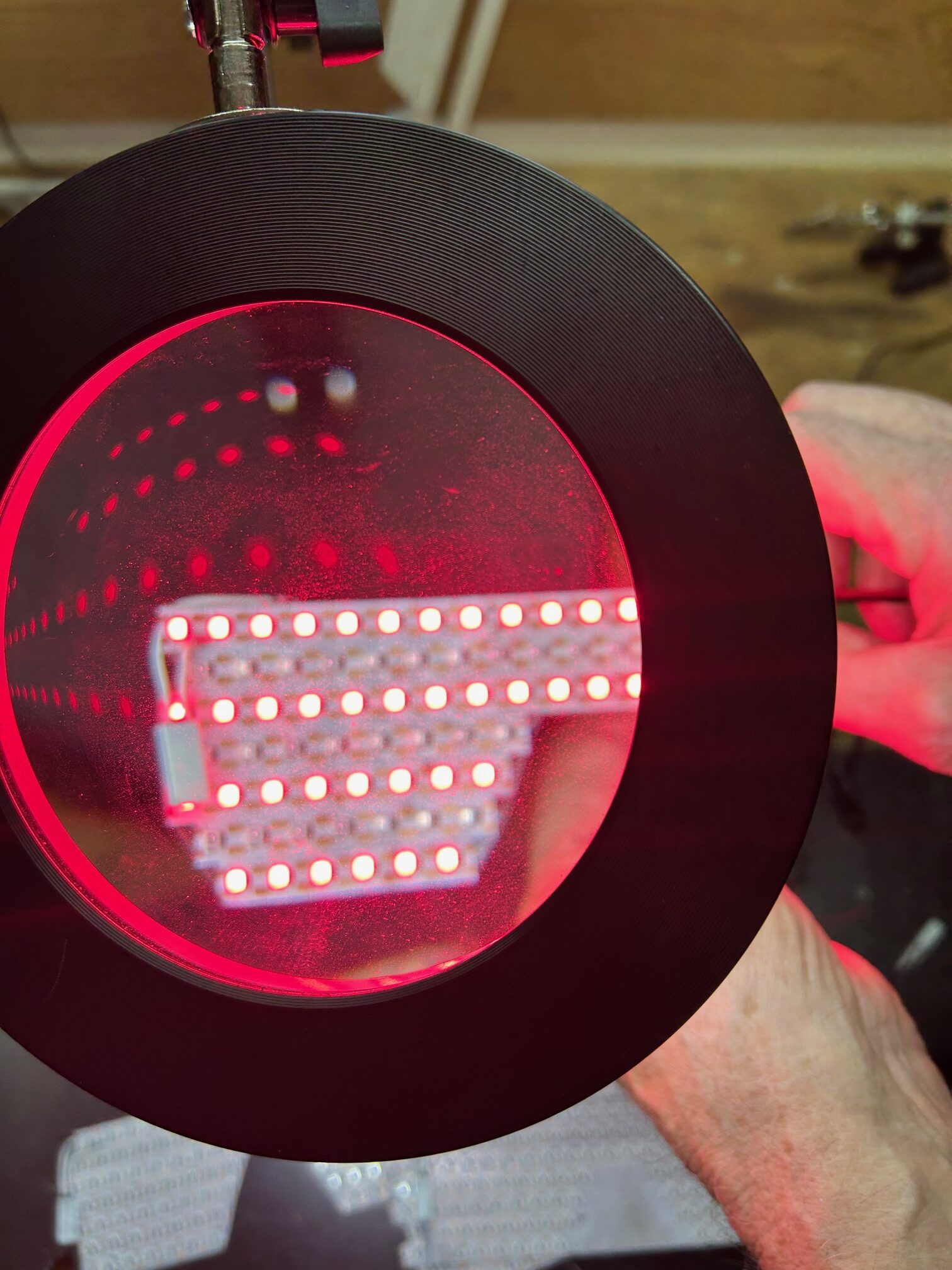
This study used 670 nm PBM in a metabolic retinal condition characterized by mitochondrial stress and inflammation—mechanisms directly relevant to the Spectral WaveFront’s 670 nm and 810 nm wavelengths. Although the protocol, dosing, and delivery method differ from WaveFront’s ocular-specific geometry, the study reinforces the safety of red-light PBM applied near the retina and supports continued investigation of wavelength-specific retinal metabolic modulation.
Link to original research here
Editor’s note: Kim et al. provide important safety and feasibility data for 670 nm PBM in diabetic macular edema. While the study did not show structural or visual superiority over placebo in CI-DME with good visual acuity, the underlying metabolic pathways remain relevant to red/NIR PBM mechanisms. For comparison of WaveFront’s 670/810 nm parameters, see our WaveFront Evidence Alignment. Far-red light inhibition of early diabetic retinopathy lesions is demonstrated in Tang 2013. Mitochondrial ATP support in aging retina is detailed in Gkotsi 2014, and broader diabetic retinopathy mechanistic pathways are reviewed in Roy 2016.
Related Articles
- Randomized Clinical Trial of 670nm PBM for CI-DME – Kim BJ 2022
- Far-Red Light Inhibits Early Diabetic Retinopathy Lesions – Tang 2013
- Recharging Mitochondrial Batteries in Old Eyes – Gkotsi 2014
- Mechanistic Insights into Diabetic Retina Pathology – Roy 2016
- NIR PBM for Retinal Vein Occlusion Macular Oedema – Cornish 2021
Key Takeaways
- Randomized trial (N=135) found no significant BCVA or structural improvements with 670 nm PBM vs. placebo in CI-DME
- Device compliance was excellent (92% PBM, 95% placebo) over 4-month treatment period
- No serious adverse events reported, supporting safety of daily 670 nm PBM in diabetic retinopathy
- Study provides foundational safety data for future investigations of PBM dosing and patient selection in DME
Study Overview
| Study Type: | Randomized placebo-controlled trial |
| Wavelength(s): | 670 nm |
| Treatment Protocol: | Daily home-based treatment for 4 months |
| Sample Size: | N=135 adults (69 PBM, 66 placebo) |
| Primary Outcome: | No significant difference in CST or BCVA; favorable safety profile |
Full Citation
Kim M, et al. (2022). Photobiomodulation therapy for center-involved diabetic macular edema with good visual acuity: A randomized clinical trial. Ophthalmology Retina, 6(4):259-267. View Publication