Condition focus: Optic Nerve Injury & Secondary Degeneration
Following traumatic optic nerve injury, secondary degeneration extends damage beyond the initial injury site, leading to progressive loss of uninjured axons and retinal ganglion cells. This study investigated whether 670 nm near-infrared light could protect CNS tissue from secondary degeneration following partial optic nerve transection. Rats underwent partial optic nerve injury with experimental groups receiving 670 nm LED treatment, while outcomes included oxidative stress markers, axonal integrity, and visual function assessed through electrophysiology and histology.
Animals treated with 670 nm light demonstrated significantly reduced oxidative stress in both injured and adjacent uninjured tissue, with lower levels of lipid peroxidation and protein oxidation compared to untreated controls. Histological analysis revealed preservation of axonal integrity in regions vulnerable to secondary degeneration. Visual evoked potential recordings showed maintained electrical responses in treated animals versus progressive functional decline in controls. The protective effects extended spatially beyond the primary injury zone, indicating that photobiomodulation can interrupt cascade mechanisms driving secondary degeneration. These findings establish 670 nm treatment as a potential neuroprotective strategy for traumatic optic nerve injury and other conditions involving secondary CNS degeneration.
WaveFront Alignment:
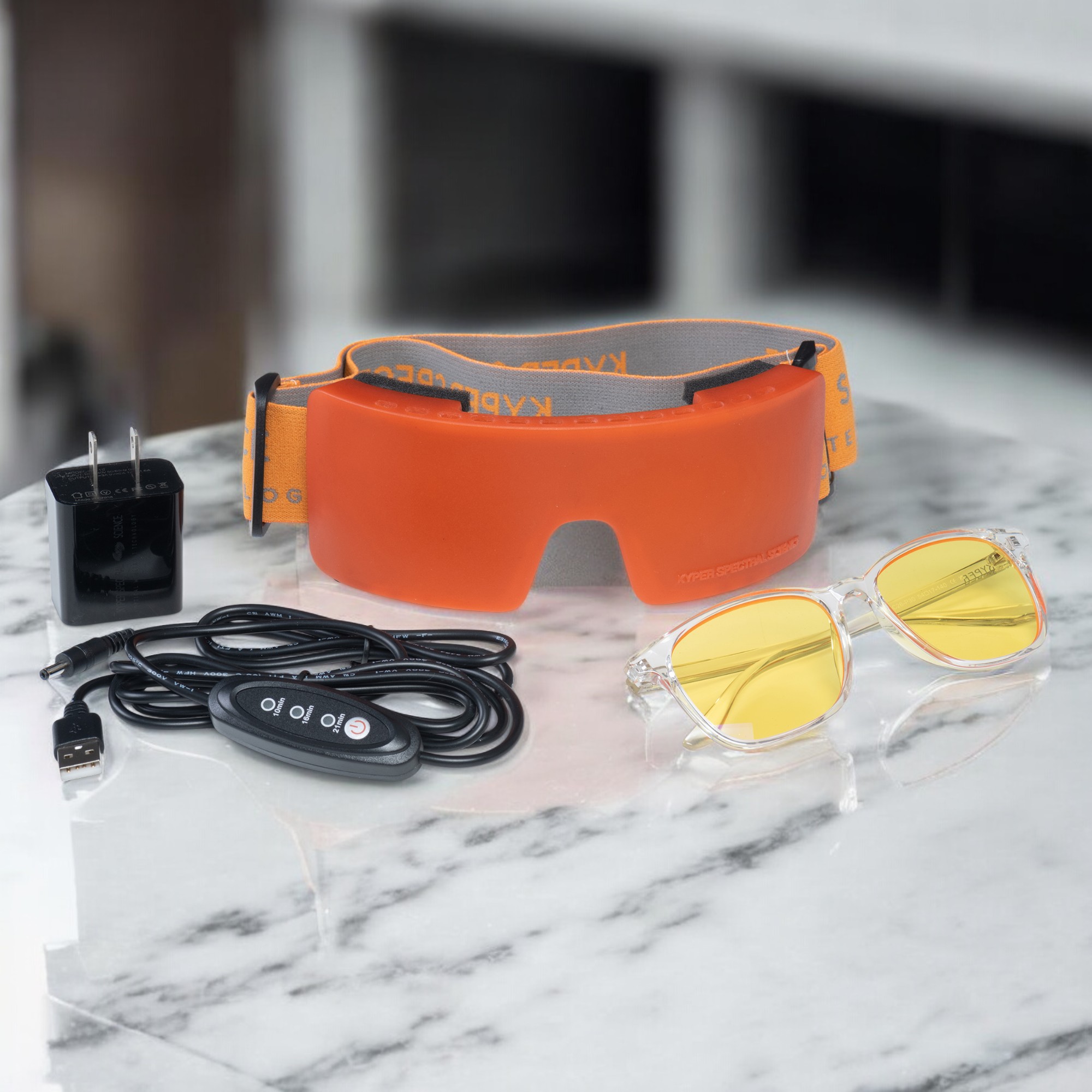
Fitzgerald’s demonstration that 670 nm reduces oxidative stress and preserves function in secondary degeneration validates the Spectral WaveFront’s neuroprotective potential for optic nerve conditions, highlighting protective effects that extend beyond primary injury sites to vulnerable adjacent tissue.
Read full article here
Editor’s note: Fitzgerald 2010 demonstrates 670 nm protection against secondary degeneration in optic nerve injury. For related optic nerve applications, see Szymanski 2013 and Rojas 2008. Wavelength comparison appears in Giacci 2014. Broader oxidative stress reduction context in Kokkinopoulos 2013 and Beirne 2017.
Related Articles
- 670nm Light in Optic Nerve Injury – Szymanski 2013
- Neuroprotective Effects of NIR in Mitochondrial Optic Neuropathy – Rojas 2008
- 670nm vs 830nm: Comparative Neuroprotection – Giacci 2014
- Age-Related Inflammation Reduced by 670 nm – Kokkinopoulos 2013
- Photostimulation of Mitochondria for Retinal Neurodegeneration – Beirne 2017
Key Takeaways
- 670 nm treatment significantly reduced oxidative stress markers in both injured and vulnerable adjacent tissue
- Preserved axonal integrity in regions susceptible to secondary degeneration versus progressive loss in controls
- Visual evoked potentials maintained in treated animals with protective effects extending beyond primary injury
- Demonstrates photobiomodulation can interrupt cascade mechanisms driving secondary CNS degeneration
Study Overview
| Study Type: | Animal model (optic nerve injury with secondary degeneration) |
| Wavelength(s): | 670 nm (near-infrared) |
| Treatment Protocol: | LED treatment following partial optic nerve transection |
| Sample Size: | Rat models with electrophysiology and histological assessment |
| Primary Outcome: | Reduced oxidative stress, preserved axonal integrity, and maintained visual function |
Full Citation
Fitzgerald M, et al. (2010). Near infrared light reduces oxidative stress and preserves function in CNS tissue vulnerable to secondary degeneration following partial transection of the optic nerve. J Neurotrauma, 27(11):2107-2119. View Publication